

If you've recently had a baby or have a little one under three, Lancaster University's Infant and Child Development Lab would love to hear from you.
The Lab team are looking for families who would like to volunteer to help with research into how children develop and learn.
By participating in their fun and engaging studies, you’ll help discover the science of child development - meaning your children will actually become little scientists themselves!
And when you visit, you’ll receive free parking and refreshments, and a gift voucher too.
Jill Lany, a senior lecturer in developmental psychology, has been talking to Beyond Radio about the work of the Lab.
LISTEN to Jill Lany talking about the Infant and Child Development Lab
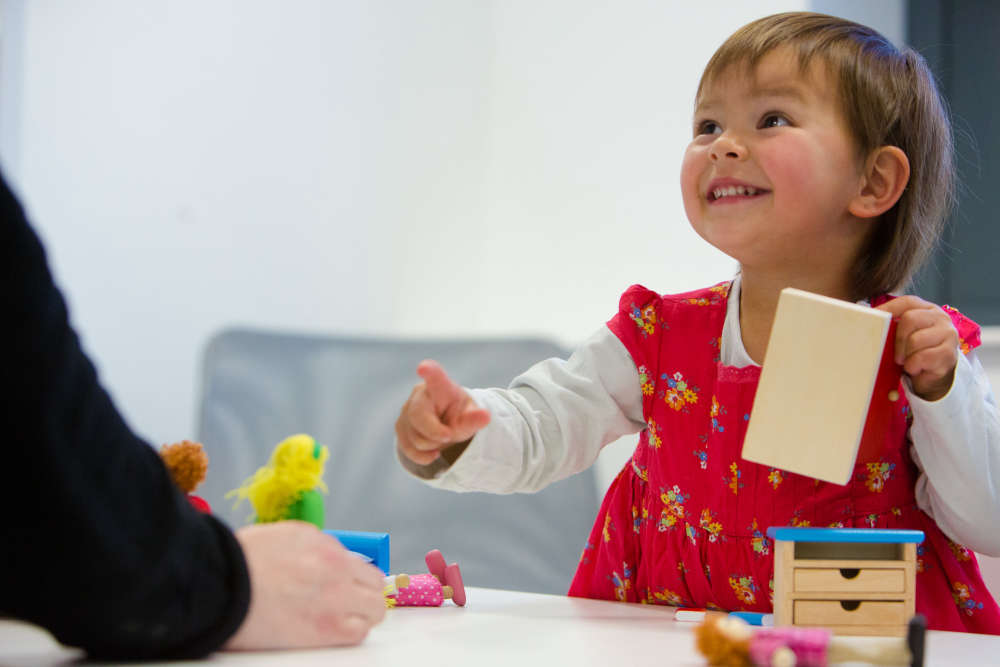
"We're all really fascinated about how children learn and develop," said Jill.
"It's incredibly important to understand their development to better support them, and it tells us a lot about what the human mind is like.
"The human mind is changing very quickly in those early years, so we can really learn a lot about it by studying children in those early years.
"We rely on families to help us learn about child development by taking part in this research, and it's also a chance for families to learn about new research discoveries."
The friendly team at the Infant and Child Development Lab, based in the Whewell Building on the campus, investigate how children grow, learn, and thrive in a relaxed space for families and their children.
They explore topics like prenatal development, language acquisition from sounds and words to sentences and understanding others, hearing, cognitive development and social interactions.
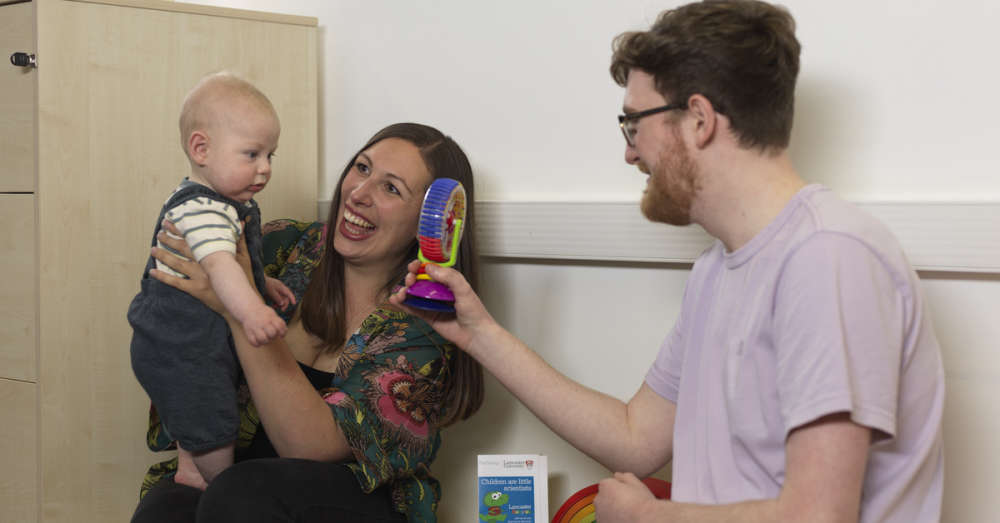
The team also invites older children to the lab on the Lancaster University campus for research on language, hearing, reading and much more.
They are inviting families to join the research community, particularly focussing on very young children.
By signing up, you’ll be notified when a study matches your child’s age and other relevant criteria.
Most studies involve just one visit to Lancaster University and typically last less than an hour, and clear information is always given on what to expect.
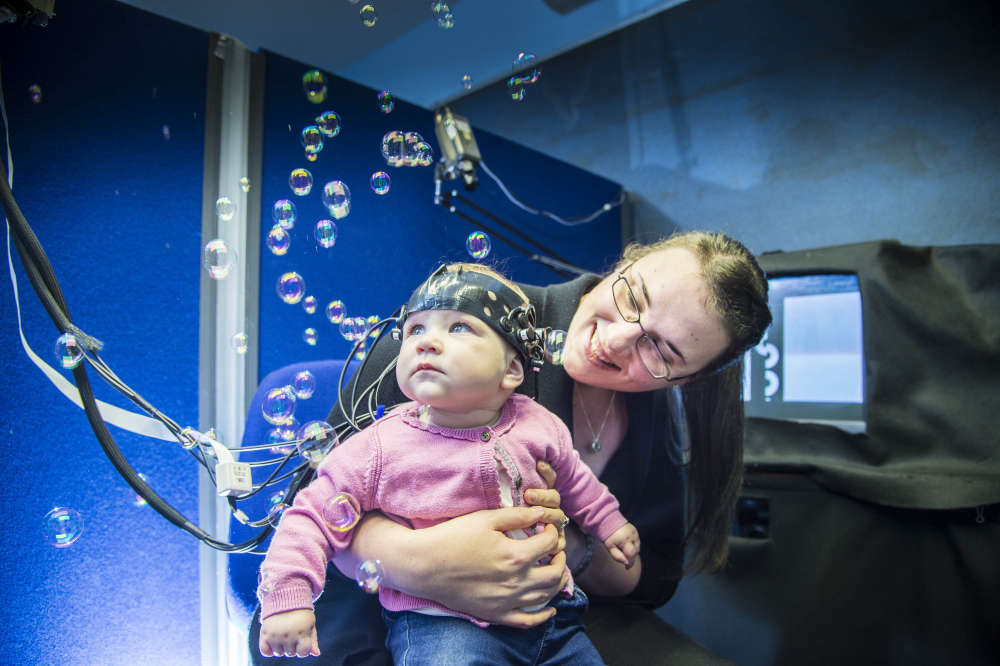
"We study how infants and children learn language, the development of their memory, their attention, their executive function, and we even study things like the development of curiosity in babies," said Jill.
"Some of the studies involve eye tracking. We can get a really good sense of what kind of things capture their attention and how it is they select information to learn from, and what kind of words they understand.
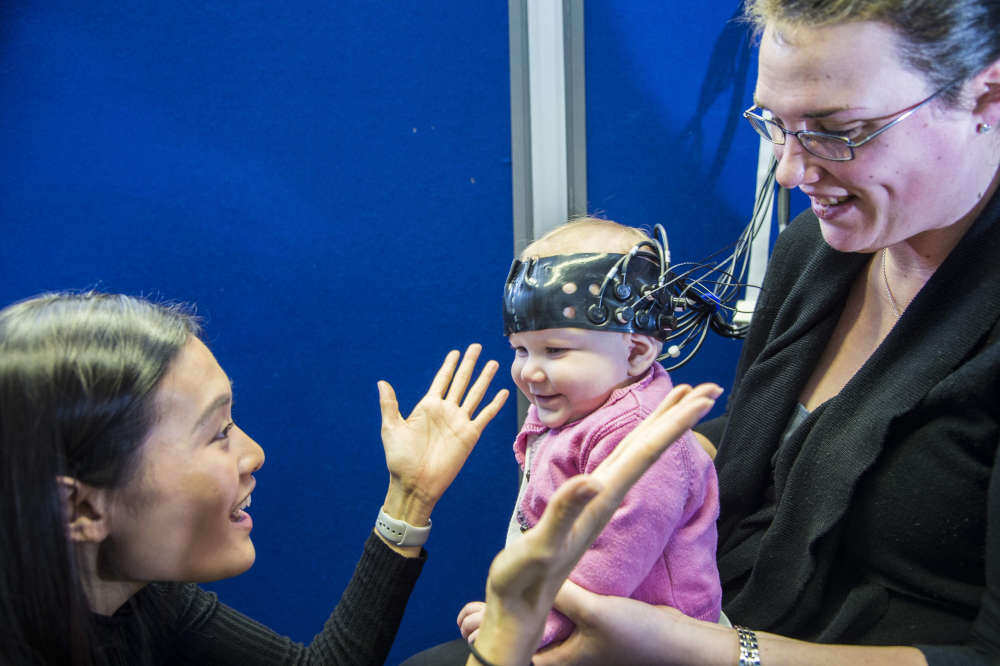
"We also use a really cool brain imaging technique that we can use in the Lab, that uses a little headband that you put on the child's head, so we can look at what kinds of brain activity might be going on when infants are looking at different things.
"These are studies that we're really excited to be engaged in right now and really hoping to get some help from families in the community."
For details and to sign up, see below.
Find out more about the Infant and Child Development Lab at the website HERE.
You can email icdlab@ lancaster.ac.uk
You can register to participate HERE.

 LISTEN: Lancaster mental health charity holds Valentine's Ball to support its vital work
 Lancaster museums always have something new to discover
 Lancaster City Council launches weekly food waste collections this February
 Stay well and quit smoking with help of Morecambe community centre
 ADVERTISING FEATURE: Banks Lyon Jewellers sparkles in Lancaster for 40 years