
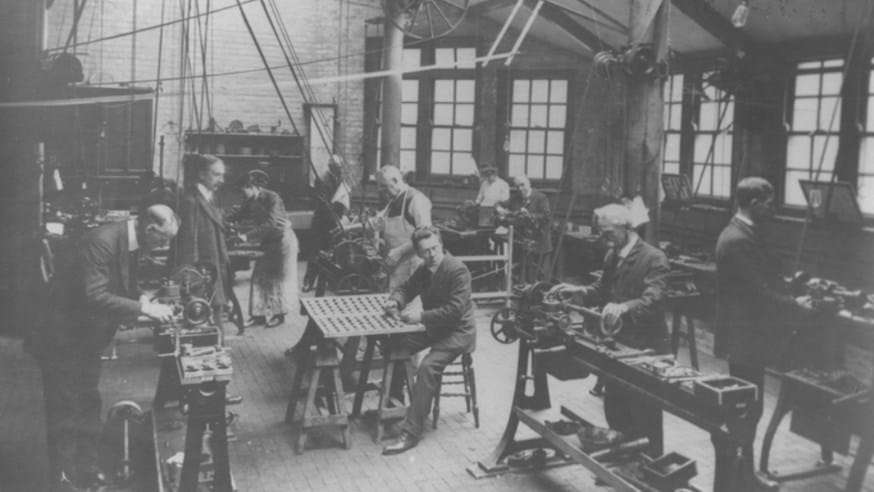
Lancaster University researchers have used voices from Victorian speakers to highlight the evolution of different accents from across Lancashire and Cumbria.
The new study, published in the Journal of Sociolinguistics and undertaken with researchers at Leiden University, in The Netherlands, looks at how northern dialects evolved in the nineteenth century.
Using recordings from the Elizabeth Roberts Working Class Oral History Archive, held at Lancaster University Regional Heritage Centre and Lancashire Archives, researchers tracked the Victorian origins of accent in Preston, Lancaster and Barrow.
The ‘voices of Victorians’ helped identify strong links between the growth of industry and the evolution of accents in the three locations.
The archive contains interviews with working class people born from the 1880s until the 1940s and was recorded by Lancaster University social historian Dr Elizabeth Roberts and colleagues in the 1970s and 1980s.
These interviews detail the ordinary lives of working-class people who lived in north Lancashire in the late nineteenth and twentieth century, which included Barrow until 1974, and cover topics such as how to weave cotton, family life and death, and preparing food such as sheep’s head broth.
Researchers used the archive recordings to conduct a linguistic analysis of how consonants are pronounced across the region.
In particular, they aimed to understand how urban dialects in formerly industrial areas have evolved due to population changes in the nineteenth century.
The research particularly focuses on the use of the rhotic ‘r’, (the pronunciation of ‘r’ in words like car, arm and park) as a barometer for accent development and the impact on vowel systems. This feature was once emblematic of the Lancashire accent, but in northern England it is now manly restricted to east Lancashire.
Linguistic analysis confirms local perceptions that the accent in Barrow is very different from the rest of Lancashire and Cumbria.
The Barrow-in-Furness accent is very different from the rest of Lancashire and Cumbria because of an intense mixing and rapid population change in the late 1800s, says new research by Lancaster University, which used the voices of Victorian speakers to inform the study.
People moved to Barrow, a shipbuilding centre now in Cumbria, from other parts of the UK, Scotland and Ireland, as well as surrounding areas and, says the research, the ensuing mix and population change led to the development of a new dialect in the town.
Researchers used information from the census to show that there was extremely high population growth and fertility rates in Barrow in 1850–1880.
People moved to the region from Cornwall, Scotland, Ireland, and the Midlands as well as surrounding areas. This intense mixing and rapid population change led to the development of a new dialect in the town.
The study also found speakers born in Lancaster retained more of the traditional aspects of Lancashire accent, for example pronouncing the ‘r’ in words like ‘arm’ and ‘car’, and Lancaster accents developed as a more mixed variety due to the greater inter-class contact and lesser dependence on only one industry (cotton) as the city evolved in Victorian times.
Lead researcher Professor Claire Nance said: “The archive recordings allow us to look back in time at the Victorian origins of contemporary dialects.
“Interviews from Preston, Lancaster and Barrow give us a fascinating insight into the development of dialects in northern England as they have very distinct social histories and settlement patterns.
“We found very strong links between the growth of industry and the evolution of accent. This research allows us to celebrate accent as another aspect of our region’s long-lasting and distinct cultural heritage.”
The project was funded by Lancaster University and an Erasmus+ Internship (European Union) grant.

 Fundraiser launched to support Lancaster Chinese New Year Festival
 Lancaster man to run Manchester Half Marathon in honour of his parents
 Lancaster young artists invited to design Mayor’s official Christmas card
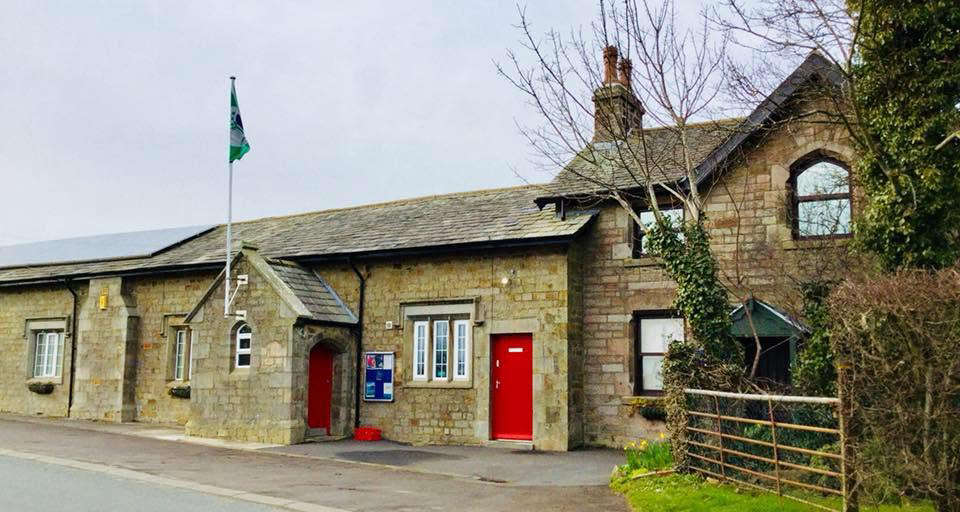 Future of primary school near Lancaster under consultation over falling pupil numbers
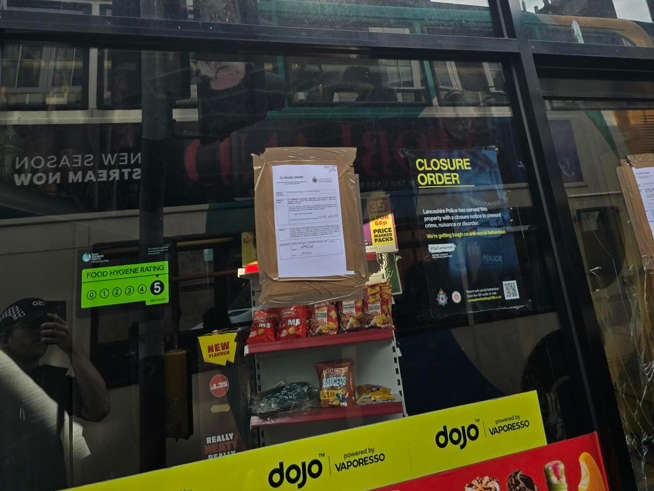 Lancaster city centre store hit with closure order
 Mental health nurse role helps children at Royal Lancaster Infirmary get support sooner
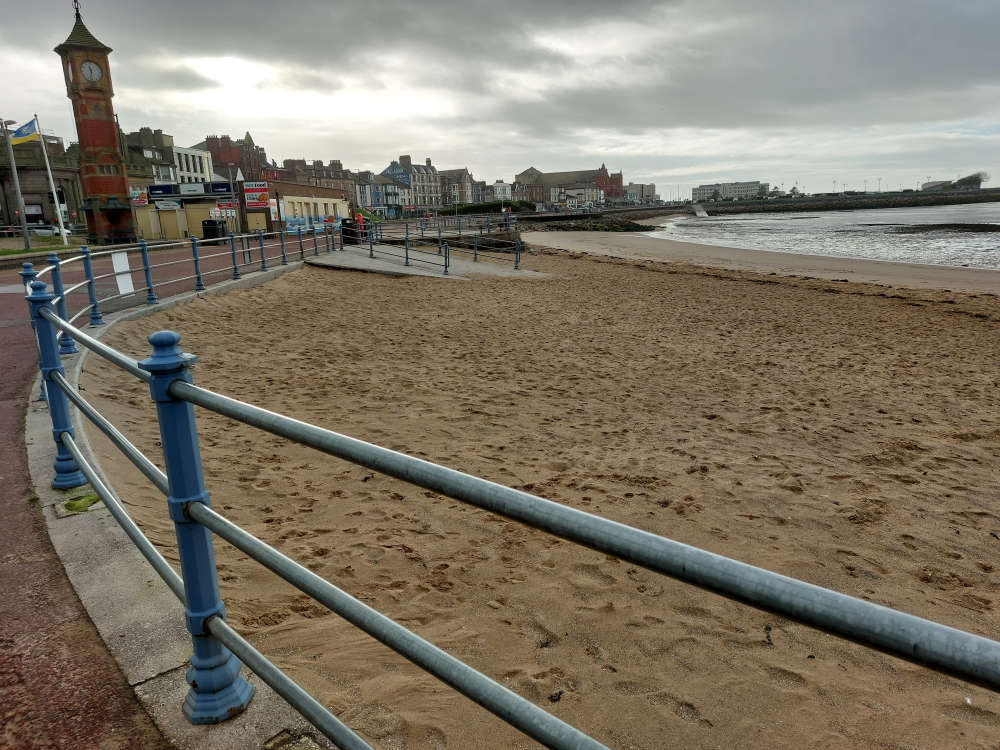 Dog ban on Morecambe beaches lifted until May
 Next chapter for Williamson Park café redevelopment begins
 Couple ‘absolutely heartbroken’ after announcing departure from popular Morecambe Bay pub
 Lancaster village set for royal visit
 INTERVIEWS: Pride in Place officially opens offices in West End of Morecambe
 Lancaster community centre awarded £94,000 Children in Need funding boost
 Christmas free parking announced for shoppers in the Lancaster district
 Police investigate spate of rural burglaries across Lancaster and Morecambe district
 Lancaster on Ice confirmed to return after councillors grant permission
 Man jailed for historic sexual offences at his equestrian yard
 Patient Impact Award for Lancaster University researcher
 Three arrests made in Lancaster police crackdown as e-bikes seized
 Partnership delivers knockout results for young people in Lancaster
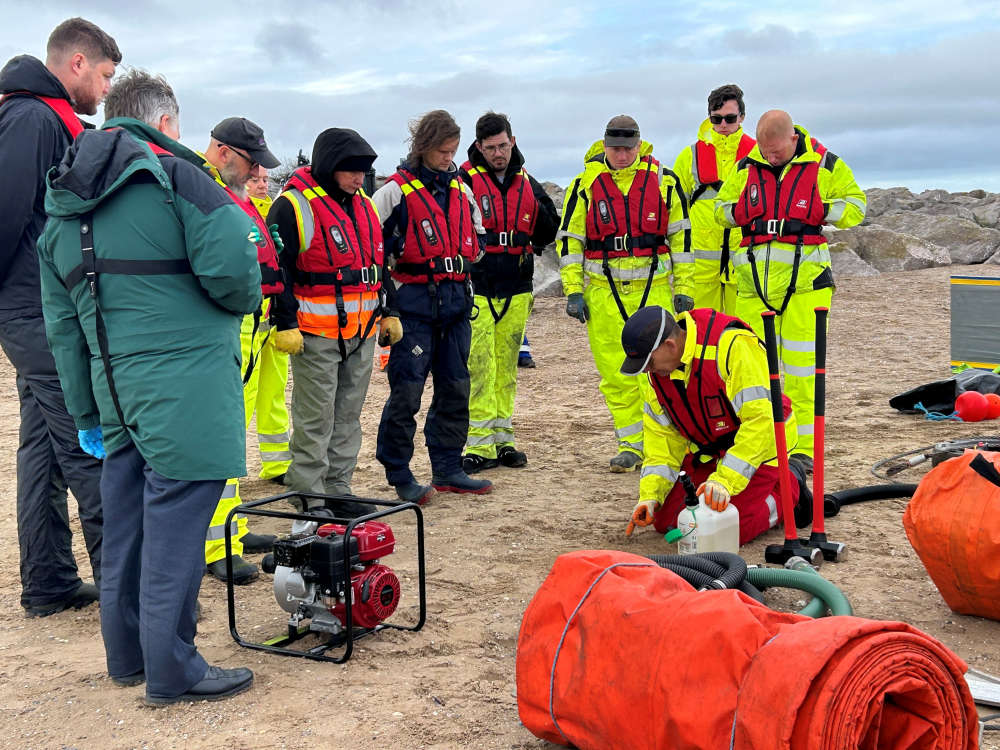 Morecambe hosts counter pollution training exercise