An inspection by the Regulator of Social Housing has told Lancaster City Council that "improvement is needed" in a number of areas.
The Government regulator's judgement, published this week, said the council is meeting its governance requirements but there are "some weaknesses in the landlord delivering the outcomes of the consumer standards".
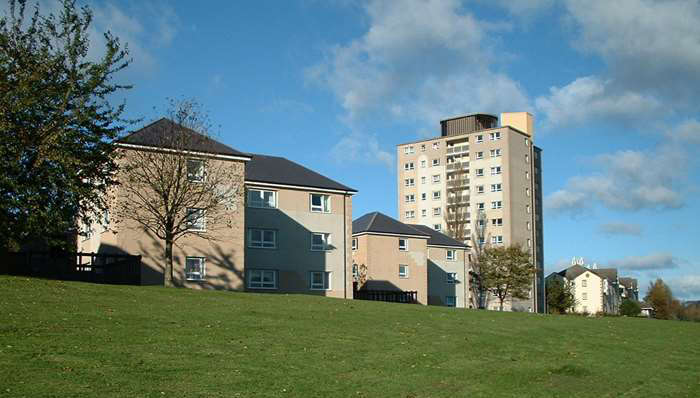
Lancaster City Council manages approximately 3,500 council homes and is the district’s biggest social landlord. It manages housing in areas including Mainway in Skerton, The Marsh, Hala and the Vale.
All registered providers of social housing are now subject to an inspection by the regulator every four years, and this was Lancaster City Council's first grading.
The regulator said improvements needed to be made "specifically in relation to the outcomes in the Safety and Quality Standard and the Transparency, Influence and Accountability Standard" and gave the council an overall C2 grade.
They said "all landlords should aim for a C1 grade" which means they are meeting governance requirements.
A C2 grade means "the landlord meets our governance requirements but needs to improve some aspects of its governance arrangements to support continued compliance".
There are also C3 and C4 grades for those who do not meet requirements and in areas of "serious regulatory concern".
The inspectors found that the council is meeting its health and safety obligations and that tenants feel listened to and valued. It also highlighted the council's proactive work to tackle anti-social behaviour and support communities.
Weaknesses were due to a backlog in repairs, the council not fully understanding tenant needs and diversity, the opportunities for tenants to influence decisions required further development and embedding, and that some residents saw a delay in the council responding to complaints.
The inspectors rated the council in four areas.
The first is the Safety and Quality Standard, which requires landlords to have an accurate, up-to-date and evidenced understanding of the condition of their homes that reliably informs the provision of good quality, well maintained and safe homes for tenants and to ensure that tenants’ homes meet the requirements of the Decent Homes Standard.
"Lancaster City Council has provided assurance that it has accurate, up-to-date and evidenced information on 90 per cent of its homes through surveys on the condition of its homes and has plans in place to reach 100 per cent by December 2026," says the judgement.
"It reported that 100 per cent of its homes meet the Decent Homes Standard.
"The Safety and Quality Standard requires landlords to identify and meet all legal requirements that relate to the health and safety of tenants in their homes and communal areas. We have assurance that Lancaster City Council is meeting its obligations in relation to landlord health and safety compliance.
"The Safety and Quality Standard also requires landlords to provide an effective, efficient and timely repairs service for the homes and communal areas for which they are responsible.
"Through the inspection we saw evidence that Lancaster City Council is broadly delivering repairs in a timely way for its tenants, however we found that there is a backlog of repairs. Lancaster City Council has a plan in place to complete most of the overdue repairs by the end of November 2026, and we will continue to engage with the council as it addresses this."
The council was also assessed against the Neighbourhood and Community Standard, which requires landlords to work in partnership with appropriate local authority departments, the police and other relevant organisations to deter and tackle anti-social behaviour and hate incidents in the neighbourhoods where they provide social housing.
"We gained assurance that Lancaster City Council works proactively with relevant organisations to deter and tackle anti-social behaviour and hate crime in the neighbourhoods where it provides homes, including using a range of tools and responses.
"There are a number of ways for tenants to report anti-social behaviour and hate crime, and Lancaster City Council has policies in place setting out its approach to managing incidents.
"Lancaster City Council has adopted a triple track approach to prevention, intervention and enforcement and prioritises early intervention, alongside enforcement action where behaviour persists or escalates.
"In relation to the Tenancy Standard, we saw evidence that Lancaster City Council offers tenancies or terms of occupation that are compatible with the purpose of its accommodation, the needs of individual households, the sustainability of the community, and the efficient use of its homes."
The third standard is for Transparency, Influence and Accountability which sets out that landlords must treat tenants and prospective tenants with fairness and respect and take action to deliver fair and equitable outcomes for tenants.
"Throughout the inspection, Lancaster City Council demonstrated a respectful and positive culture towards tenants, and engaged tenants told us that they felt listened to and valued.
"However, we have limited assurance that Lancaster City Council fully understands the diverse needs of tenants as it does not have comprehensive information about the characteristics and diversity of its tenants.
"This restricts its ability to deliver fair and equitable outcomes for tenants.
"Lancaster City Council uses the information it has at an individual level to prioritise households with vulnerabilities, but it was not able to evidence that diverse needs inform overall decision making and service design.
"Lancaster City Council acknowledges that this is an area of weakness and has plans in place to address this. We will engage with Lancaster City Council as it develops its approach."
The Transparency, Influence and Accountability Standard also requires landlords to provide accessible information so that tenants can use landlord services, understand what to expect from their landlord and hold their landlord to account.
"It also requires landlords to take tenants’ views into account when making decisions about the delivery of landlord services.
"Lancaster City Council offers a range of opportunities for tenants to get involved although we found some of these arrangements are not yet fully embedded or developed to deliver independent challenge or to influence decision making at this time.
"This is an area of weakness that Lancaster City Council will need to continue to progress and develop. Through our ongoing engagement with Lancaster CC, we will seek assurance that changes have been embedded and improved outcomes are being delivered for tenants."
Finally, the Transparency, Influence and Accountability Standard sets out that landlords must ensure complaints are addressed fairly, effectively, and promptly.
"We saw evidence that tenants can easily make a complaint, and we found that Lancaster City Council analyses and learns from complaints and has plans in place to improve tenants’ engagement in this area by the end of March 2027.
"However, we did find that responses to complaints had not always been timely, and Lancaster City Council should continue to focus on delivery in this area."
Overall, the judgement said: "Lancaster City Council has engaged constructively with us throughout the inspection process, has demonstrated that it understands the issues it needs to address, and is already taking action towards rectifying the weaknesses identified.
"We will continue to engage with Lancaster City Council as it works to address the issues set out in this judgement."
Inspectors observed a meeting of Lancaster City Council’s Council Housing Advisory Group and a Tenants’ Voice Meeting, and met with engaged tenants, officers, and Councillor Caroline Jackson, the leader of the council who is also the cabinet member for housing.
Councillor Caroline Jackson

They also reviewed a wide range of documents provided by Lancaster City Council.
The council said it "welcomed the findings" of the inspection.
"We welcome this inspection and the constructive feedback it provides," said Councillor Jackson.
"The C2 verdict is a great outcome and testament to the excellent work across our Housing service.
"We are already taking action to address the areas identified for improvement, including embarking on a tenant census to help us understand our tenants needs and have made good progress since the regulators visit in reducing the outstanding repairs noted.
“We see this as an opportunity to build on the positive foundations already in place and in continuing to provide safe and good homes for our residents."
The regulator's report highlighted the council's positive culture towards tenants and the range of opportunities that are on offer to involve them.
Jim and James, chair and vice chair of Lancaster City Council Tenants' Voice, said: “The Lancaster City Council Tenants' Voice welcome the findings from the Regulator of Social Housing.
“We feel it reflects the hard work the housing team have put in in recent years, particularly around good governance. We look forward to supporting continuous improvement through partnership working, especially for those tenants with diverse needs.
“It is encouraging to see the regulator highlight the housing service's respectful and positive culture towards tenants as well, as this is something we see every day.”

 Christmas free parking announced for shoppers in the Lancaster district
 Police investigate spate of rural burglaries across Lancaster and Morecambe district
 Lancaster on Ice confirmed to return after councillors grant permission
 Man jailed for historic sexual offences at his equestrian yard
 Patient Impact Award for Lancaster University researcher
 Three arrests made in Lancaster police crackdown as e-bikes seized
 Partnership delivers knockout results for young people in Lancaster
 Morecambe hosts counter pollution training exercise
 Two arrested and charged after alcohol related incidents in Carnforth
 Operator of main train line through Lancaster and Morecambe Bay to be nationalised
 Event will celebrate military heritage of the Lancaster Campus of University of Cumbria
 Samba Espirito celebrate 10th anniversary with spectacular Bay Drumfest
 Crews deal with car on fire on M6 near Lancaster
 Crews tackle lorry on fire on Bay Gateway
 ‘Significant sum’ stolen from pensioner amid reports of courier fraud in Lancaster and Carnforth
 New public telescope in Morecambe offers spectacular views across bay
 Council vows to take action in aftermath of Lancaster and Morecambe floods
 Eric Morecambe's 100th birthday and town film festival up for Lancashire Tourism Awards
 Two wards at Royal Lancaster Infirmary set to close as part of community care plans
 Leading Morecambe councillor defects from MBIs to Greens