
The Morecambe Bay area has the highest rate of common cancers compared with the average rates for the whole North West or even England, according to Lancaster University research.
However, average cancer rates for other areas like Manchester and Liverpool have not yet been analysed by statisticians so this does not mean that Morecambe Bay is the worst in the region or in England, but that it compares poorly with the average rates for the North West and England.
The three types of cancer which are higher in the Morecambe Bay area are breast, bowel and urological - which includes prostate, kidney, bladder, testicular and penile cancers.
The area covered by the University Hospitals of Morecambe Bay NHS Foundation Trust includes Morecambe and Lancaster in Lancashire plus Kendal, Ulverston, and Barrow-in- Furness in Cumbria.
The study also found that people in Barrow-in-Furness are at the highest risk of developing any type of cancer compared within the Morecambe Bay region or the average of the North West overall.
The risk in Barrow-in-Furness was three times greater than the risk for people living in surrounding rural areas and higher than for similar urban areas in Morecambe and Lancaster. Differences between regions demonstrated that rural areas were least impacted by cancer.
Morecambe, Lancaster and Barrow-in-Furness, had a higher risk of cancer up to six times greater than the risk of cancer in the more rural areas of Windermere West, Burton in Lonsdale and Quernmore.
Factors influencing the risk of a cancer diagnosis were age, deprivation, ethnicity, frailty, and additional illnesses.
The research published in Public Health in Practice, the journal of the Royal Society for Public Health, analysed 15,506 cancer diagnoses in the Morecambe Bay area between 2017 to 2022.

Lead author Dr Luigi Sedda (above) from the Lancaster Ecology and Epidemiology Group at Lancaster Medical School said: “Research needs to be carried out to gain a better understanding of why this is the case and what can be done to reduce these differences in the areas that need it most.
“Understanding which areas have a high number of cancer cases, the geographic, socio-economic, and demographic drivers for the presence of multiple cancers in an area, is essential to develop efficient and integrated interventions.
“Area specific programmes need to be put in place which target the specific risk factors and cancer types of an area, with programmes focusing first on locations with the largest risk and incidence of cancer, such as Barrow in Furness.
‘’These programmes could include, for example, mobile screening units to increase early diagnosis, increased awareness of the signs and symptoms of cancer within workplaces, and increasing access to exercise, support to stop smoking and dietary advice within local communities. Working with the local communities is essential for the success of these interventions.”
Figure for 2016 show that breast cancer was the most common cancer for women, prostate cancer the most common for men while bowel cancer was the third most common cancer for both men and women according to the Office for National Statistics.
The research was funded by North West Cancer Research (NWCR) and led by the Lancaster Ecology and Epidemiology Group at Lancaster Medical School in collaboration with Liverpool John Moores University, Queen’s University Belfast, and University Hospitals of Morecambe Bay NHS Foundation Trust.
The other authors included Dr Thomas Keegan from Lancaster Medical School, Professor Peter Atkinson from Lancaster University Faculty of Science and Technology, Alison Birtles from Rosemere Cancer Centre at Lancashire Teaching Hospitals NHS Trust and the University Hospitals of Morecambe Bay NHS Foundation Trust, Jessica Mendes from the University of Oxford, Catherine Jones and Kelly Heys from the University Hospitals of Morecambe Bay NHS Foundation Trust and Andy Knox from Lancashire and Cumbria Integrated Care Board.

 Police issue quicksand warning after riverbank danger for school pupils in Lancaster
 Lancaster animal shelter launches 'Big Build' fundraiser to help save charity
 LISTEN: Morecambe "definitely submitting a bid" to become first UK Town of Culture
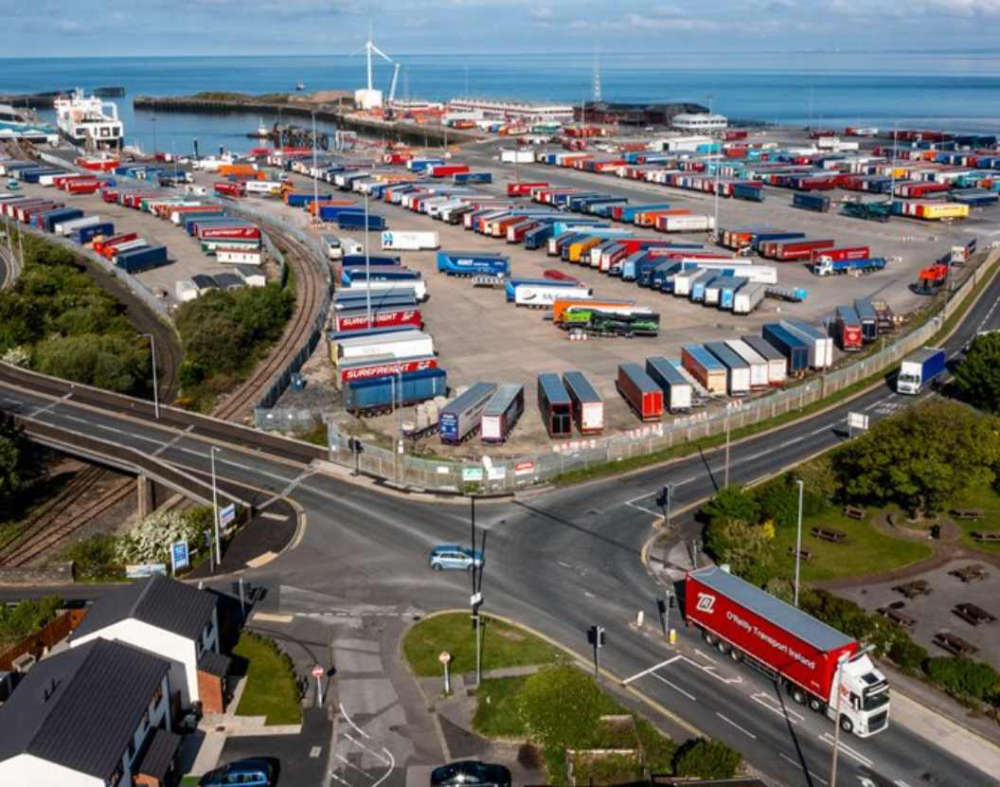 Heysham Port upgrade blamed for traffic chaos 'trapping residents in their homes'
 LISTEN: Tourism champs hail Eden Project and Tour de France as huge for Morecambe Bay area
 Donation helps college pan ability football team to play in national championships
 LISTEN: Meet the new manager of the Midland Hotel in Morecambe
 LISTEN: Main contractor to build Eden Project Morecambe to be announced this month
 £1.2m of funding for flood defence schemes in Lancaster district announced
 Morecambe Bay hospital trust unveils new painless blood test
 Thousands raised to help boost return of Lancaster Music Festival
 High street computer games shop in Lancaster closes down
 LISTEN: Carnforth actor wins Hollywood and Paris awards for horror film role
 "1600 potholes repaired last week" says councillor as roads debate rumbles on
 Burger King takeaway in Lancaster city centre closes down
 Morecambe lifeboat crew reunite dog lost on sands with owner
 New Morrisons Daily supermarket opens in Morecambe
 Council investigate after derelict food trailer found dumped in Lancaster layby
 Man charged after pedestrian died in Morecambe hit and run
 LISTEN: We go out on Pothole Patrol in Morecambe