
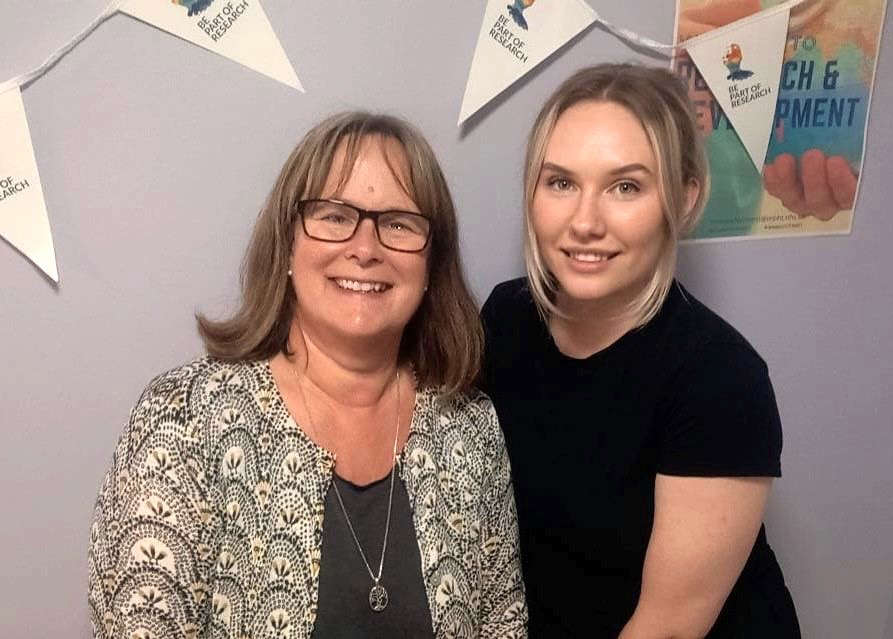
Local hospital bosses have shared details of pioneering research, as part of Breast Cancer Awareness month.
The campaign takes place throughout October and the University Hospitals of Morecambe Bay NHS Foundation Trust’s Research and Development Team is marking it by sharing details of the team’s involvement in pioneering research studies and how they can benefit patients.
Around 55,000 people are diagnosed with breast cancer each year and it is the most common type of cancer in the UK. Thankfully, there is a good chance of recovery from breast cancer, particularly if it is detected at an early stage.
UHMBT’s R&D Team is currently recruiting to 36 studies across the Royal Lancaster Infirmary (RLI), Westmorland General Hospital (WGH) in Kendal and Furness General Hospital (FGH) in Barrow.
These are a mix of commercial drug studies as well as academic research and hundreds of patients are involved, sometimes for as long as 10 years or more; 17 of the active studies are related to cancer, including six breast cancer studies.
Hilary Thatcher, a Senior Research Nurse and Oncology Research Team Lead for UHMBT, and Laura Durrans, a Research Practitioner for UHMBT, both say there are many benefits for breast cancer patients who choose to be involved in research studies.
Hilary, who has worked in the department for the last 12 years, said: “Research can help to improve patient outcomes, and our focus is always to improve their quality of life.
‘’Participation is always optional, but if a clinician feels that the patient is suitable and meets the eligibility, we will look to offer the patient the opportunity to take part, although they are free to opt out at any time. Every study follows a strict protocol which has been ethically approved''.
“A lot of studies look at patients’ quality of life and we ask all sorts of questions throughout their treatment. This is important because of the length of time it takes to go through the treatment.
‘’Patients often decide to get involved in research for altruistic reasons – they want to do something to help others. They hope that by participating in research studies they will be helping patients in the future.”

Laura, who has a master's in psychology and came into research via the National Institute for Health and Care Research (NIHR) Practitioner Pathway, said: “We get a lot of great feedback from our patients, and they like the extra level of care that we can provide.
‘’Research studies may involve extra tests and patients can find that reassuring. People tell us how they are feeling, and we build up close relationships.”
One of the research studies currently underway at UHMBT is an international study called OPTIMA for patients with ‘ER-positive HER-2' negative breast cancer. Patients with this type of cancer are often prescribed chemotherapy and hormone (endocrine) therapy to reduce the chances of the cancer returning, but some people might not benefit from having chemotherapy.
Hilary said: “The decision not to have chemotherapy can be an active choice as there are risks in having that type of treatment.
‘’There are many variables as to what treatment a person might be offered, and the OPTIMA study will help us to decide on the best ones to use.”
Another research study that has been underway at UHMBT for more than 10 years is called ‘FAST- Forward’. Patients who have been diagnosed with early breast cancer are usually prescribed radiotherapy after surgery as part of their curative treatment.
Research has shown that having radiotherapy after breast cancer surgery lowers the risk of the cancer coming back, however it may cause some short- and long-term side effects as well. This trial has huge implications for patients’ convenience and quality of life.”
The team is also undertaking a research study with Astra Zeneca to trial a new type of chemotherapy for triple negative breast cancer.
Hilary said: “I love my job, and I love working with these wonderful patients. As the lead for the team, I don’t see patients as often as Laura, but everything I do is aimed for them by selecting and setting up suitable trials that will be of benefit.
‘’Ultimately, I do it because I want to help improve patient care.”
Anyone who is interested in finding out more about participating in research can click on this link and register to Be Part of Research at www.nihr.ac.uk
UHMBT advises women to check regularly for any changes and to see their GP promptly if they are concerned. Men can also be diagnosed with breast cancer, but this is much less common.
The Trust also encourages people to attend their local screening appointments between the ages of 50 – 70 years.

 Police issue quicksand warning after riverbank danger for school pupils in Lancaster
 Lancaster animal shelter launches 'Big Build' fundraiser to help save charity
 LISTEN: Morecambe "definitely submitting a bid" to become first UK Town of Culture
 Heysham Port upgrade blamed for traffic chaos 'trapping residents in their homes'
 LISTEN: Tourism champs hail Eden Project and Tour de France as huge for Morecambe Bay area
 Donation helps college pan ability football team to play in national championships
 LISTEN: Meet the new manager of the Midland Hotel in Morecambe
 LISTEN: Main contractor to build Eden Project Morecambe to be announced this month
 £1.2m of funding for flood defence schemes in Lancaster district announced
 Morecambe Bay hospital trust unveils new painless blood test
 Thousands raised to help boost return of Lancaster Music Festival
 High street computer games shop in Lancaster closes down
 LISTEN: Carnforth actor wins Hollywood and Paris awards for horror film role
 "1600 potholes repaired last week" says councillor as roads debate rumbles on
 Burger King takeaway in Lancaster city centre closes down
 Morecambe lifeboat crew reunite dog lost on sands with owner
 New Morrisons Daily supermarket opens in Morecambe
 Council investigate after derelict food trailer found dumped in Lancaster layby
 Man charged after pedestrian died in Morecambe hit and run
 LISTEN: We go out on Pothole Patrol in Morecambe