
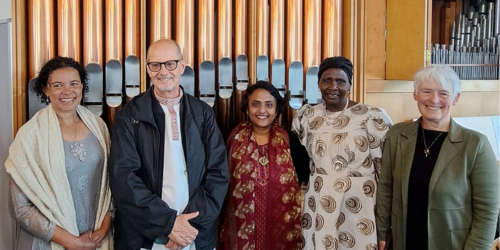
Ancient relics held at a Lancaster museum have been officially handed back to an African country in a ceremony at a local university.
The ceremony was held at the University of Cumbria in Lancaster to formally hand over the culturally significant artefacts belonging to Emperor Tewodros II of Abyssinia, to the Ethiopian Heritage Authority.
The artefacts, a lock of hair and a bloodstained piece of cloth, are from the collections of the King’s Own Royal Regiment (KORR) Museum, housed in Lancaster City Museum.
The official repatriation service took place on May 12 in St Martin’s Chapel at the University of Cumbria’s Bowerham campus, which was the site of ‘Bowerham Barracks’ and historically associated with the regiment.
The items were formally transferred to Dr Alula Pankhurst, of the Ethiopian Heritage Authority, who is the grandson of the suffragette Sylvia Pankhurst who settled in Ethiopia towards the end of her life.
They were seized as part of a British imperial hostage rescue ‘expedition’ to Abyssinia in 1868 under the leadership of General Sir Robert Napier, during which Tewodros’s fortress at Magdala was looted and burned down.
The items are thought to have been taken by members of the KORR’s predecessor, the 4th (King’s Own) Regiment of Foot, after Tewodros took his own life, and were later passed into the regiment’s collections.
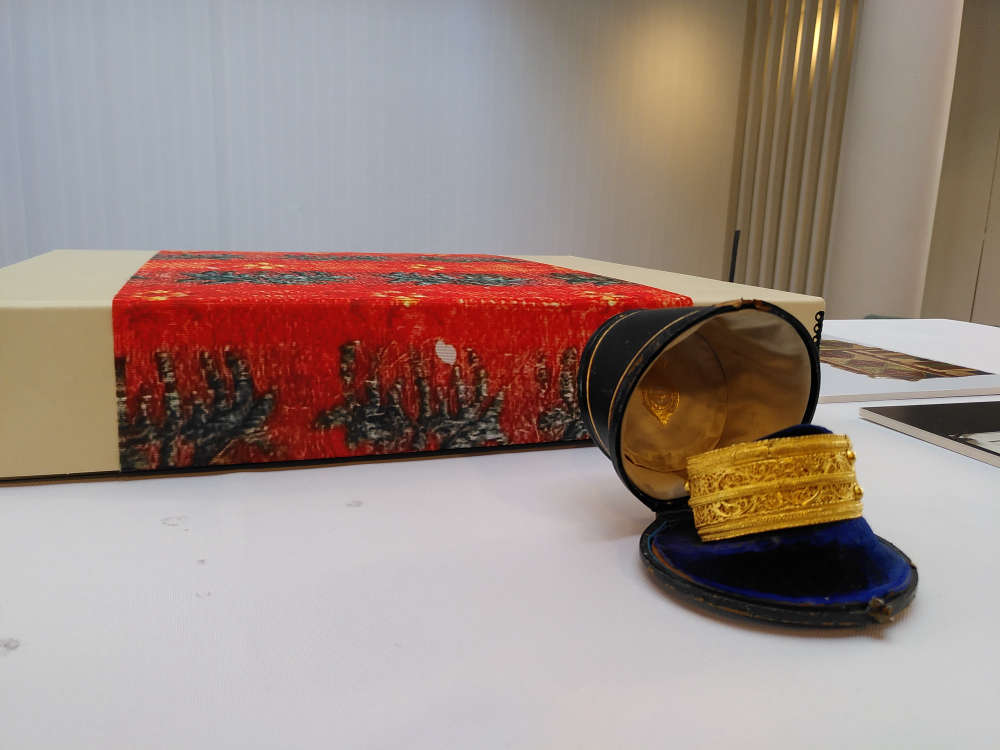
In addition to these items, Lord Robert Napier and his sister, Mrs Ruth Self, who represented the Napier family, also gifted a beautiful gold bracelet linked to the campaign to the Ethiopian authorities.
As part of a broader process of examining the regiment’s involvement in the campaign, the Trustees of the KORR Museum appointed Ethiopian heritage expert Eyob Derillo to explore their holdings in this area.
When his research revealed the two bodily artefacts, the trustees advised the Ethiopian Heritage Authority (ETA) who then formally requested the trust to ‘restitute and repatriate’ the two items which ‘are of great interest and cultural significance to the people of Ethiopia.’
Councillor Sam Riches, cabinet member for museums on Lancaster City Council, said: "It was a genuine privilege to observe the repatriation of the relics, which had been cared for by Lancaster City Council as part of the collection of the King's Own Royal Regimental Museum.
"The presence of Lord Napier added an incredible personal link, and I was very moved to hear him say that his forebear would have been glad that the relics were being returned.
"The fact that Lord Napier contributed a gold bracelet, originally gifted to the wife of one of the British hostages by Emperor Tewodros II during the siege, was especially poignant.
"There was genuine delight from the Ethiopian representatives who were present with us to take back ownership of the artefacts, and their generous words about a shared commitment to historical understanding, dialogue and cultural reconciliation will stay with everyone who was lucky enough to be present for this significant moment."
Professor Christina Hicks of Lancaster University, who attended, said: “I grew up in Ethiopia, and it shaped who I am today,
“To witness this homecoming was a profound honour, and I hope many more such moments of repair can follow.
“Repatriation is an act of recognition, an acknowledgement that what was taken, was taken unjustly. For the Ethiopian community, this moment matters deeply. And for those of us who have been shaped by Ethiopia and its people, it matters too.”

 Dancing Eric Morecambe Statue part of police campaign to warn about AI deepfakes
 PHOTOS: Great Wall of China trek raises more than £300K for Lancaster hospice
 Another earthquake hits Silverdale as tremors felt across Lancaster and Morecambe Bay
 Fire crews tackle vehicle fire on M6 near Lancaster
 Poetry in motion as live workshop comes to Morecambe rail journey
 Lancaster pupils highlight school crossing patrol road safety campaign
 UK wide lettings agency takes over Lancaster student housing firm
 Morecambe live music bar gets change of name
 Firefighters put out large vehicle fire in Lancaster
 Latest national rankings place Lancaster University third in north west
 Work on new housing on Lancaster city centre car park continues
 Lancaster District residents thanked for embracing food waste recycling
 Police probe after spate of vehicle break-ins in Halton
 LISTEN: Kindness has been overwhelming after Carnforth man's horrific swimming pool accident
 Sisters' Morecambe Winter Gardens diaries reveal 50 years of stories
 LISTEN: Lancaster and Morecambe runners take on Great North Run for great causes
 Lancaster young people's mental health charity "at risk of closure"
 LISTEN: Lancaster charity thrilled by new centre after long search for permanent home
 Morecambe scooter rally returning after year break
 'Sinkhole' appears outside Lancaster city centre shop