

Lancaster University has collected the Queen Elizabeth Prize for Education from their Majesties the King and Queen.
The nation’s highest education honour was awarded to the university by King Charles and Queen Camilla at a ceremony held at St James's Palace in London.
It was for pioneering work that is helping to drive a global transformation in digital literacy.
Computing researchers at Lancaster University played a key role in the creation and development of the BBC micro:bit, a pocket-sized programmable computer.
Through the efforts of many partners, led by the not-for-profit organisation the Micro:bit Educational Foundation, micro:bit has helped 70 million children in 85 countries – around two per cent of all children on the planet – to become coders and technology creators.
The Queen Elizabeth Prizes for Higher and Further Education are part of the UK national honours system, recognising outstanding work in universities and colleges at the highest level.
Lancaster University was among 19 prize-winners that attended the formal presentation ceremony at the palace.
Lancaster’s award delegation included three researchers who helped to develop the micro:bit at Lancaster University’s School of Computing and Communications: Professor Joe Finney, Professor Steve Hodges and Dr James Devine.
Five others who have used the micro:bit in their studies and work were also included in the delegation.
Lancaster University’s deputy vice-chancellor Professor Rebecca Lingwood, pro-chancellor the Rt Hon Alistair Burt, and Professor Joe Finney collected the award on behalf of the university at the ceremony.
“We are immensely proud to receive this award recognising the global impact of our researchers whose innovation, partnership working and dedication has enabled the creation of this pioneering educational technology that empowers and inspires young people worldwide," said Professor Lingwood.

More than 11 million devices have been distributed around the world, inspiring young minds to explore coding and problem-solving.
The micro:bit is helping to lay the foundation for an entire generation to develop critical computational thinking skills and explore career paths in technology.
Beyond delivering technical skills, micro:bit also plays a key role in increasing diversity in computing, helping to close the persistent gender gap in technology.
It has been adopted at scale by educators across the UK and in countries including Singapore, Korea, Hong Kong, Australia, Spain, the Western Balkans, Denmark, Norway, Croatia, Uruguay, Brazil, Jamaica and Canada, ensuring digital learning opportunities are accessible to all.
The micro:bit was created in the UK a decade ago by a BBC-led consortium, which included several major technology companies. As the sole academic institution involved, Lancaster University developed key software for the micro:bit, helped deliver the hardware, and shaped the coding experience.
Professor Joe Finney, of Lancaster University’s School of Computing and Communications, led the design and development of the micro:bit’s run-time operating system – the invisible magic that powers every device and underpins the micro:bit experience.
Its thoughtful and efficient design enables students to exercise their creativity while empowering teachers with a low-cost, practical and reliable teaching tool.
“It is truly fantastic to see Lancaster's work recognised for its contribution to society in this way," said Professor Finney.
"It represents the dedication and work of so many people over the past ten years to go from a conceptual idea to a creative, educational platform that’s inspiring millions of students worldwide. I'm very much looking forward to seeing what the micro:bit can achieve in the next 10 years.”
Lancaster researchers continue to support the evolution of the micro:bit, working with the UK-based Micro:bit Educational Foundation. In parallel, the university is pursuing an exciting research agenda to identify further benefits of teaching with the micro:bit and to explore new directions for the technology.
Steve Hodges, Distinguished Professor in Computing and Digital Systems at Lancaster University, has also worked on the micro:bit from the outset of the initiative – initially at Microsoft Research and now at Lancaster University’s School of Computing and Communications.
He said: “This award recognises the work of a great many talented and dedicated people who have provided a wide range of skills and perspectives over the past decade.
"We’re particularly grateful to our colleagues at the Micro:bit Educational Foundation for their continued dedication to supporting adoption of the micro:bit around the world.
“We are actively seeking new research collaborators and sponsors and encourage anyone curious to learn more about how they might get involved to contact us.”
People interested in working with the researchers should contact mirl-enquiries@lancaster.ac.uk
The Queen Elizabeth Prizes were formerly known as the Queen's Anniversary Prizes and have been awarded every two years since 1994 by the monarch, on the advice of the Prime Minister and following a rigorous, independent review process.
This is the 16th round of the scheme.

 Tyson Fury confirms he's left Morecambe saying home was targeted by "crackpots"
 Funding boost will help Morecambe businesses stay in touch to keep town safe
 Donation helps Friends of Lancaster school's uniform project for families
 Truck on its side after two-vehicle crash on M6 near Lancaster
 Police seize unsafe car in Morecambe after disqualified driver travelled from London
 Lancaster hotel team to tackle Lancashire peaks for charity
 Work under way on new mural to celebrate Eric Morecambe's centenary
 WATCH: YouTuber on bar crawl around Britain visits 22 Morecambe pubs in one day
 Plans go in for throwback over 55s co-housing community in Lancaster
 Trains between Preston and Lancaster to be suspended as upgrade works continue
 LISTEN: Police inspector vows to crack down on spate of motorbike thefts by youths
 Morecambe FC unveil Lancashire based new kit supplier
 Lancaster and Morecambe police trained in use of life saving spray
 Lancaster & Morecambe College secures £574K boost from government
 Morecambe FC club shop and online store closes down after supplier deal ends
 Safety warning issued after debris spotted falling from building in Carnforth
 New pasta bar 'Pimp Your Pasta' opening in Morecambe
 Lancaster Bus Station timetables fixed at last
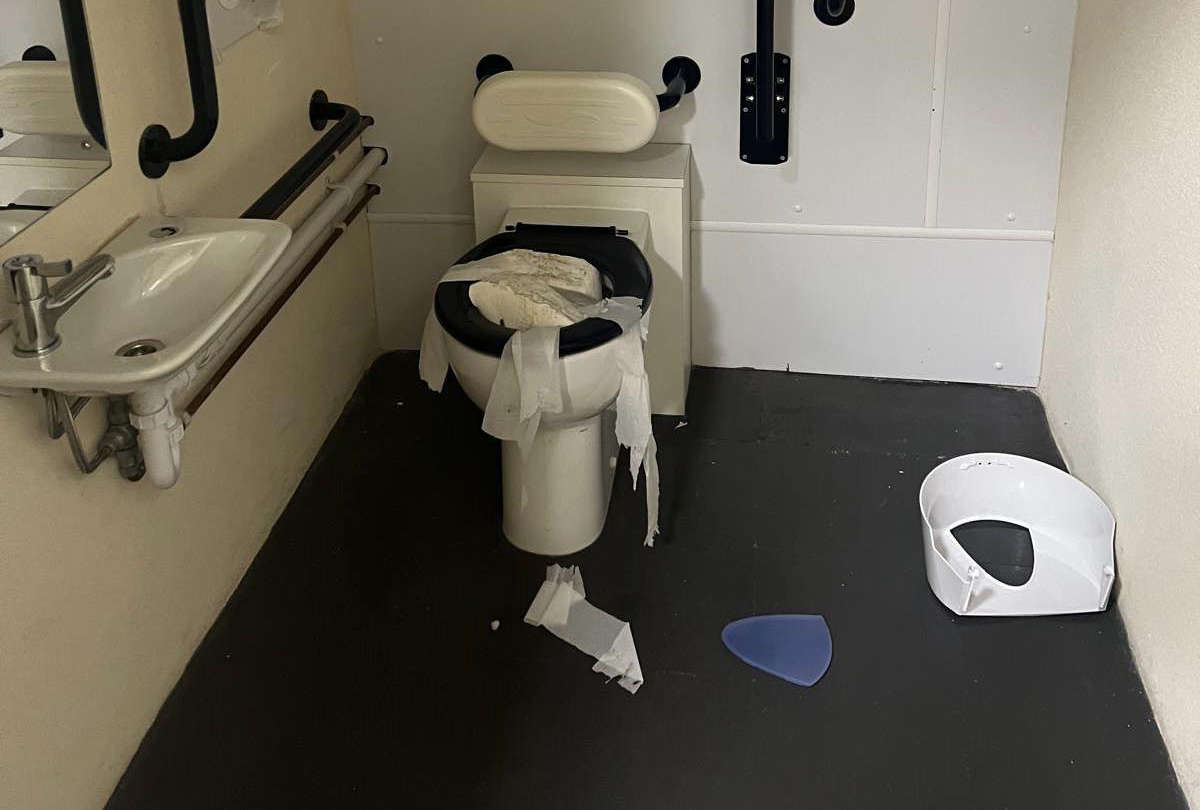 Sadness as Heysham public toilets trashed by vandals days after reopening again
 Contractor tasked with building Eden Project Morecambe revealed