A local government shake-up will see a new council formed to oversee the Lancaster and Morecambe District.
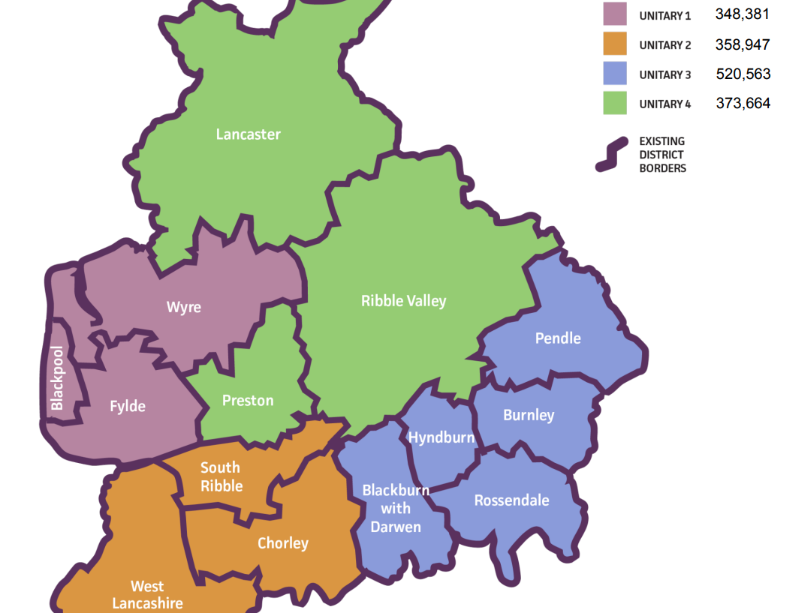
The Government has confirmed its preferred option for LGR (Local Government Reorganisation) with the existing Lancaster City Council area joining forces with Preston and Ribble Valley.
This is part of Lancashire-wide changes creating four new council areas and abolishing the county's 15 existing local authorities in less than two years’ time - subject to Parliamentary approval.
This will effectively merge large areas of the county that were previously covered by separate councils.
The current Lancashire councils will continue to operate until March 31 2028 when all of them – including Lancaster City Council and Lancashire County Council – will cease to exist.
The chosen arrangement was the one that had received the most backing from existing councils, which had each been asked to come up with suggestions for their replacements, and was supported by Lancaster City Council.
The now approved set-up was also backed by Chorley, Preston, Ribble Valley, South Ribble and West Lancashire councils.
The government has been mulling over five suggestions for the number, size and shape of the new authorities to be created after ordering the biggest council shake-up in the county for more than 50 years.
Ministers have chosen one of two four-council configurations that were under consideration – rejecting the other, as well as proposals to split the county into two, three or five new authorities.
The selected option will see new standalone councils established that will also combine, for local governance purposes, Chorley, South Ribble and West Lancashire; Blackpool, Fylde and Wyre; and Blackburn with Darwen, Burnley, Hyndburn, Rossendale and Pendle.
The new authorities – whose names will be agreed at a later date – will provide all council services in their area.
They will formally come into being on April 1 2028, but will exist in shadow form from May 2027 when their first elections will be held.
This change is part of the Government’s plan set out in its 2024 White Paper to abolish two-tier (county and district) councils and replace them with unitary authorities to deliver all local services.
The Government said this was to devolve more powers to regions and streamline local governance by delivering all services in one place.
Currently Lancashire County Council provides services like social care, education, roads, and libraries; and District councils (e.g. Lancaster City Council) manage bin collections, planning, housing, and leisure.
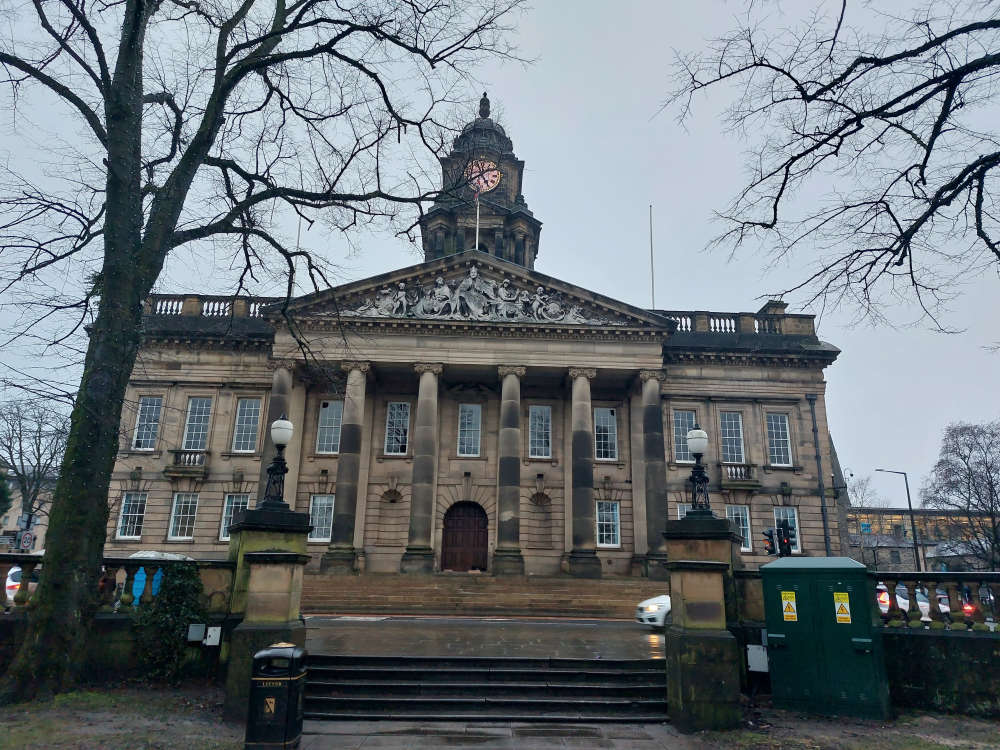
Lancaster Town Hall
Lancashire councils were asked to send their proposals to the Government by November 2025.
On Wednesday November 27, Lancaster city councillors voted to support the option that would see the creation of four new unitary councils in Lancashire - specifically joining with Ribble Valley and Preston to form a new council.
Five proposals for Local Government Reorganisation (LGR) were submitted, and a public consultation took place, ending on March 26 2026.
The Lancaster City Council website says that most staff are expected to transfer to the new councils and "the aim is to maintain service continuity and job security throughout the transition".
On the future of Council tax, it says: "Any changes to council tax would depend on the structure and financial model of the new unitary authorities. Proposals must demonstrate value for money and financial sustainability."
And on services, it says: "Services will continue as normal for now."
The Local Government District of Lancaster was formed in April 1974 and brought together five local government districts - the Municipal Borough of Lancaster, the Municipal Borough of Morecambe and Heysham, Carnforth Urban District, Lancaster Rural District and Lunesdale Rural District Councils.
Lancaster City Council also owns and controls a large number of historic buildings including the town halls of Lancaster and Morecambe, and parks including Happy Mount Park and Williamson Park.
Lancashire County Council dates back to 1889.
County Hall, Preston
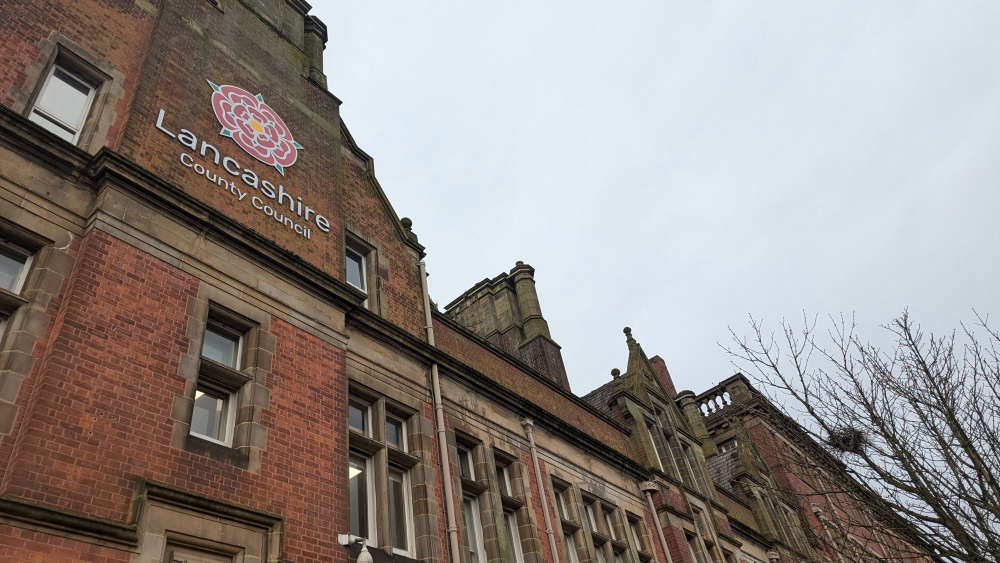
The changes will see the number of councillors across Lancashire slashed from the almost 700 that currently have seats on the upper and second-tier authorities – to anything between 198 and 313.
Parish councils, such as Morecambe Town Council and Carnforth Town Council, are not affected by the changes.
"The Government has today announced its decision on Local Government Reorganisation (LGR) in Lancashire," said a Lancashire County Council spokesperson on Thursday.
"This decision, subject to Parliamentary approval, represents the biggest change in local government in more than 50 years.
"Under the plans four new unitary councils will be created, replacing all 15 existing councils. The new unitary councils will cover:
"North Lancashire – made up of Lancaster, Preston and Ribble Valley
"West Lancashire – made up of Fylde, Wyre and Blackpool
"East Lancashire – made up of Blackburn with Darwen, Hyndburn, Rossendale, Pendle and Burnley.
"And South Lancashire – made up of Chorley, South Ribble and West Lancashire.
"The changes, which are subject to Parliamentary approval, will see the new unitary councils take responsibility for all local services in their areas.
"The Government has confirmed that elections to the new shadow councils will take place in May 2027. All councils have been working together to do the necessary preliminary work to prepare for this and there is a team ready to implement the changes needed for the new unitary councils going live on April 1 2028.
"For now, all current 15 councils will continue to provide high-quality services to residents and communities with no immediate changes to how those services are delivered or accessed."
A spokesperson for Lancashire’s LGR Board of Chief Executives, said: “Today’s announcement marks an important milestone for Lancashire.
"While there will understandably be a great deal of interest in what this means for our residents, businesses and communities, it is important to stress that for now, it is very much business as usual.
“No matter how we are reshaped, our priority remains unchanged – to continue delivering high-quality services while we work together across Lancashire to plan the next steps.
“There is strong collaboration already in place. By working together, we have a real opportunity to create something positive for our residents, communities and workforce. This is a long-term change, and there is time to ensure the transition is carefully managed.
“We recognise that change of this scale can bring uncertainty. We are committed to being open and transparent throughout the process, keeping residents, staff and partners informed as more details become available.”
Councillor Caroline Jackson, leader of Lancaster City Council (below), said: “This is an outcome we have strongly supported, as it reflects the natural connections between our areas.
LISTEN to our interview with Councillor Caroline Jackson about LGR
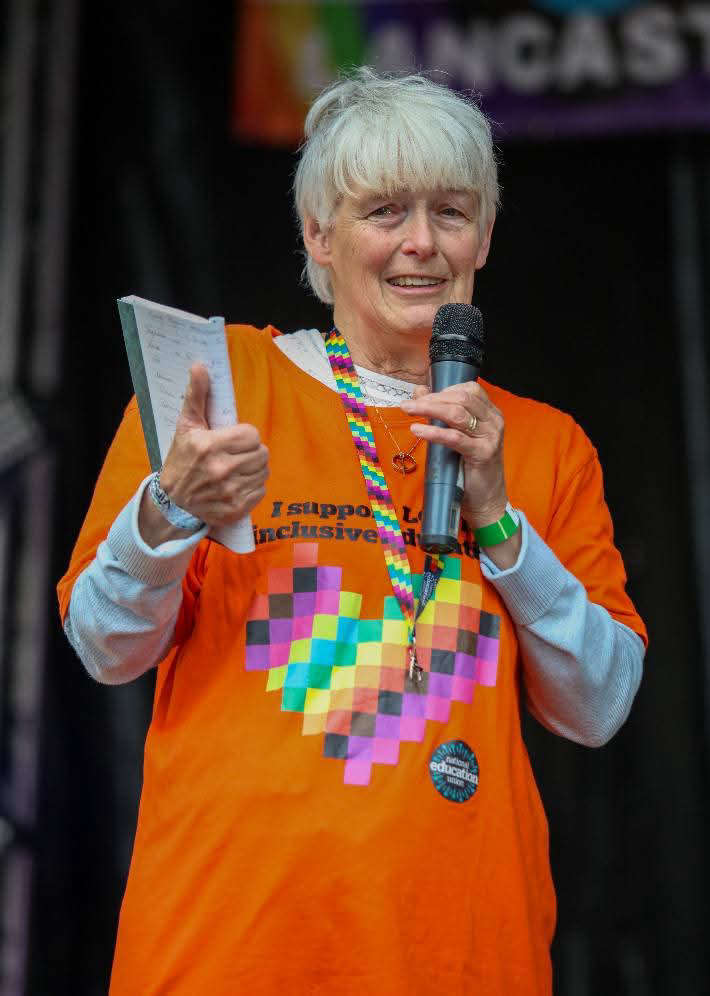
"Lancaster and Preston are both vibrant university cities, while our links with Ribble Valley reflect the importance of supporting rural communities and economies.
“This model strikes a balance between scale and local identity, giving us the opportunity to develop high-quality services while remaining close to the communities we serve.
“As we move forward, we will continue to prioritise strong local representation, including considering the creation of parish councils where appropriate.”
A Lancaster City Council spokesperson said the council will now work closely with partners to shape the future authority.

 Rebrand plans revealed for Lancaster Railway Station cafe
 Family's emotional farewell after 15 years at village pub near Lancaster
 Pedestrian has surgery for injuries after collision in Morecambe with e-biker who then rode off
 Mechanical elephant once used as children's ride returns home to Lancaster
 Lancaster solar-powered electric vehicle charging hub plans given go-ahead
 Family appeal for help after Carnforth engineer’s asbestos-related death
 Motorist seriously injured in Carnforth road crash
 Lancaster food charity unveil new permanent base in Morecambe
 Work completed at new solar energy farm in Lancaster
 Lancaster MP to run 10K race to help fund £150k children's playground scheme
 Family leaves hotel in Morecambe after 73 years after acquisition by top international chain
 More details announced for Light Up Lancaster
 Residents rally round to protect Morecambe play area from vandals
 Bank holiday weekend events cancelled due to thunderstorms forecast
 "Feelings are running high": Battle over name for new local council escalates
 Temporary car park closure announced for upgrade works at Lancaster park
 Morecambe FC says pension issue now resolved as embargo talks continue
 Morecambe man charged with child image offences
 Emergency services at scene of M6 crash near Lancaster
 New pub opens its doors in West End of Morecambe