
A 'Time Team' style discovery of a rare Roman temple - only the second of its kind in northern Britain - has been made in Lancaster.
Lancaster University staff and student researchers uncovered evidence of a Romano-Celtic temple under public land near Lancaster Castle.
The only other temple of its type in northern Britain is close to Hadrian’s Wall.
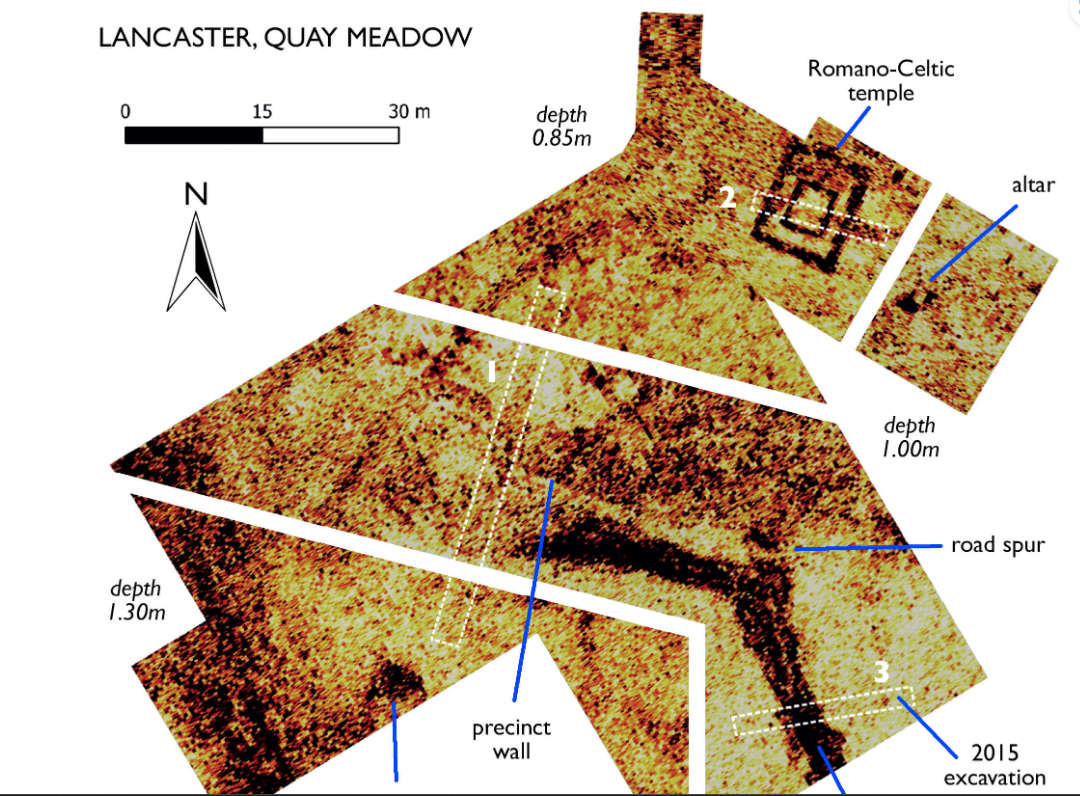
These temples have a very specific design - two sets of walls forming a square within a square, with a very small interior.
What started as a team-building exercise to train a group of PhD hydrogeophysics researchers to use specialist equipment, ended up providing evidence of an extensive religious enclosure lying just outside the Roman military fort at Lancaster.
Professor Andy Binley from Lancaster University and a team of students have been surveying the site, bringing in visiting researchers from China, Italy and Iran, and some masters and undergraduate students doing research for their degrees.
They are continuing the 'Beyond the Castle' archaeological project, which ran for five years before ending in 2017 when heritage lottery funding ran out.
Beyond the Castle aimed to improve the urban green space around Lancaster Castle and down to St George's Quay.
Lancaster had a large military fort and garrison in Roman times. It was an important command centre between Chester and Hadrian’s Wall and a base for naval operations and supply.
The Beyond the Castle project had been using standard geophysical techniques followed by trial excavation to explore the green open space between Lancaster Castle and the River Lune.
These had revealed evidence of a building, thought to be a Roman warehouse, under an area called Quay Meadow, owned by Lancaster City Council.
But Professor Binley and his students made more extensive discoveries.
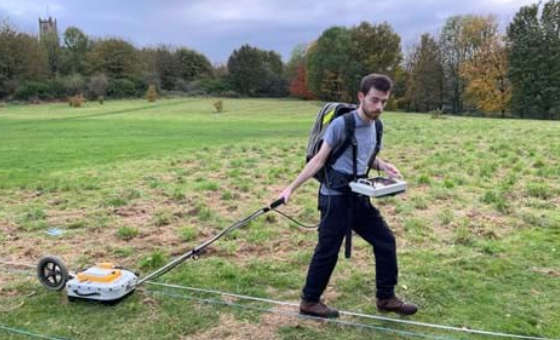
“I had a few PhD students doing geophysical research and thought this was an interesting group hobby project, training them on techniques and getting them to work as a team,” said Professor Binley (pictured below).

“Like (the TV show) Time Team, we looked under the ground without disturbing it, doing measurements on the surface.
"We used ground penetrating radar, which fires a pulse of energy into the ground and gets reflections from what lies underneath."
Professor Binley uses geophysical methods to solve hydrological problems, such as assessing underground water in agriculture and tracking groundwater contamination.
They also used a technique called resistivity mapping, injecting electricity into the ground to measure its resistance to electricity - remains like stone walls are much more resistive to electricity than soil.
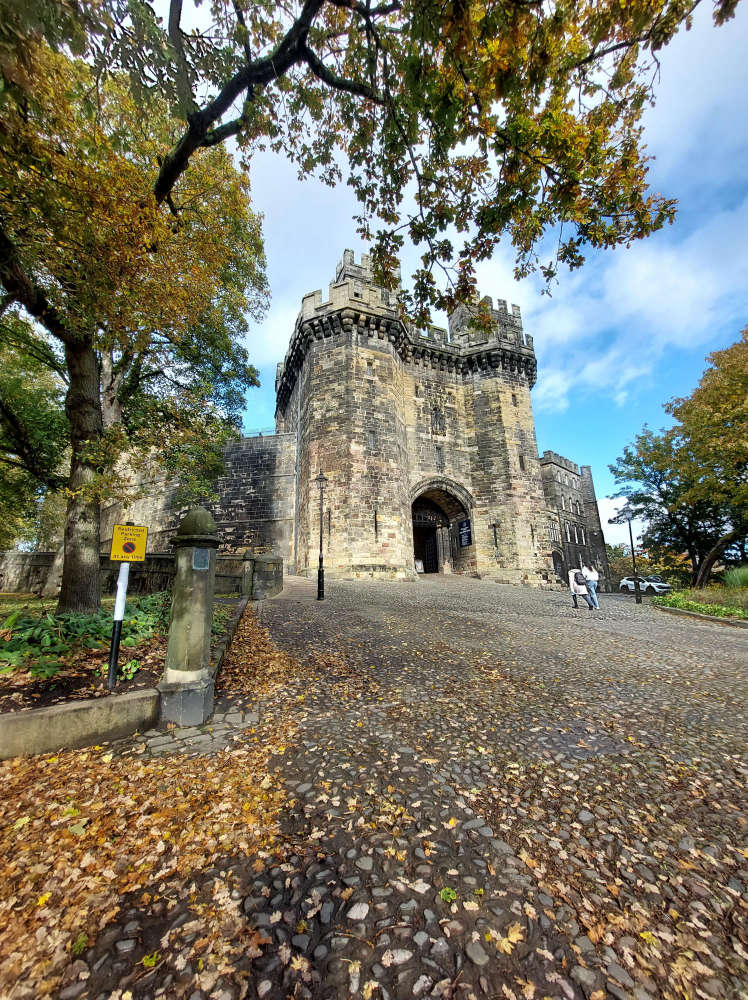
Although similar techniques have been used elsewhere in archaeological surveys, this was the first time some of these techniques and equipment had been used at the Lancaster site near the Castle (pictured below).
Dr Guillaume Blanchy, who was doing his PhD at Lancaster University using geophysical techniques to monitor soil moisture change in agriculture, ended up organising a lot of the investigations.
“In the beginning we were just trialling the equipment, then we were training others and then we just got a bit enthusiastic about the site, and wanted to map the entire field,” said Dr Blanchy.
These techniques, along with follow up coding and modelling by the researchers, produced much clearer 3D images than previous surveys conducted at the site.
"What Andy brought to the project was much more sophisticated techniques and up to date equipment and someone from outside archaeology to apply a critical eye,” said Jason Wood of Heritage Consultancy Services, Beyond the Castle's leading archaeologist.
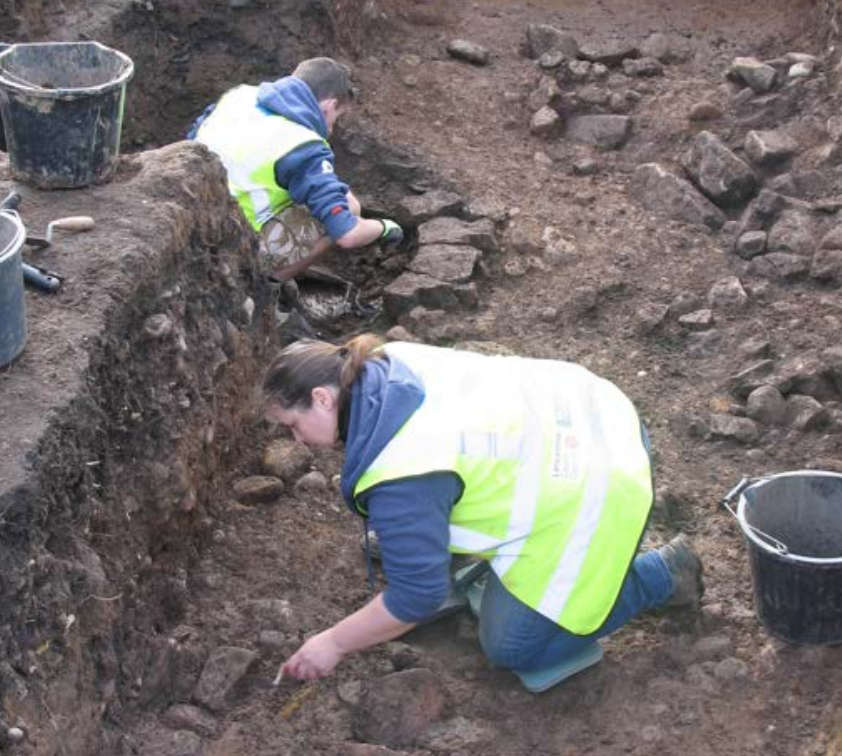
People at work during the 'Beyond the Castle' project. Image from Beyond the Castle: The Archaeology of Lancaster’s Castle Hill' by Jason Wood.
“The Roman archaeology in this area of Lancaster is very shallow because it hasn’t been built on. Consequently the archaeological layers are much nearer the surface, so there is wonderful potential.
“We found some extraordinary things.
"I thought the area would be archaeologically sterile but to my great surprise it seemed to be stuffed with archaeology dated to the Roman period.”
The major discovery was what Jason believes is a Romano-Celtic temple.
“It would have been dedicated to a god, probably associated with the sea or river," said Mr Wood.
"The inner sanctum was reserved for the priests, the outer ambulatory space was for elite members of society.
“Most of the religious activities would have happened outside the temple, including sacrifices. There would have been a sanctuary or enclosure, possibly with another temple and buildings associated with hospitality and curing the sick.
"The enclosure would have been separate from the fort, but connected to it by a road or processional way.”
Professor Binley and his students’ surveys confirm this, seeming to show the wall of the enclosure, with a gateway leading to a processional way. They also show a possible roadside mausoleum outside the enclosure and what might be the base of an altar close to the temple.
“So few of these sites have been excavated in the UK, so it is significant to have found a Romano-Celtic temple in its temenos (enclosure) by a river,” said Mr Wood.
“We couldn’t have interpreted the site without Lancaster University, and it was all done at no cost to ourselves, using techniques and related software not freely available.”
The project has also paid dividends for the student researchers involved. As well as helping to present the findings at a conference in London, Dr Blanchy has co-authored a paper on the temple, alongside Jason and Andy, published in British Archaeology magazine.
He is now using some of the coding techniques he developed in his latest research on the salt water/fresh water boundary in reclaimed land in Belgium. And he’s now collaborating on the interpretation of ground penetrating radar datasets on an archaeological project at a church near the University of Liege, where he is now working.
Professor Binley is continuing to work with Mr Wood on Castle Hill, this time exploring what lies under the Priory Churchyard and local gardens, aiming to reveal more detail about the fascinating history of Roman Lancaster.
Roman Lancaster continues to be a fascinating place that has intrigued scholars and members of the public for many years
Although it is likely that people were already living on or near the site, the Roman fort is where the present city of Lancaster really began and over the years many excavations have taken place.

 £2.5m funding boost for Eden Project Morecambe will help create new visitor zone
 Four arrests made after robberies and burglaries at Morecambe and Lancaster shops
 British Transport Police office returns to Lancaster Railway Station
 Ryelands Community Connect initiative aims to bring together locals
 Twenty vehicles caught speeding during police crackdown in Lancaster
 Councillors call for halt to demolition of vandalised Morecambe 'youth hut'
 Coastal pollution clean-up training to be held on Morecambe beach
 Man seriously injured at Morecambe pub "making excellent progress" as investigation continues
 Vandals target tractors used by King's Guide to Sands of Morecambe Bay to keep walkers safe
 MP hopes for improved mobile signal at last as new mast installed in Lancaster
 Maternity services at the Royal Lancaster Infirmary officially exit national special measures
 Crews tackle kitchen fire in Lancaster
 Opening date announced for animal rescue charity's new Morecambe home
 Lancaster MP takes on Morecambe 10K in aid of new children's playground
 Tributes paid to twice-Lancaster mayor who served on council for 56 years
 Dancing Eric Morecambe Statue part of police campaign to warn about AI deepfakes
 PHOTOS: Great Wall of China trek raises more than £300K for Lancaster hospice
 Another earthquake hits Silverdale as tremors felt across Lancaster and Morecambe Bay
 Fire crews tackle vehicle fire on M6 near Lancaster
 Poetry in motion as live workshop comes to Morecambe rail journey