

Scientists at Lancaster University behind a pioneering hand identification research project are asking for volunteers to build a new ‘control’ database to help in police investigations.
The Lancaster-University-led H-Unique programme is seeking to discover whether our hands are truly unique by looking at visible anatomical differences caused by development, genetics, ageing, the environment and accidents.
In collaboration with researchers from St John’s College Oxford and the University of Dundee, researchers from Lancaster University are developing ways of teaching computers to automatically identify and extract anatomical detail from photographs of the hand. This will enable them to create new digital tools to help police link suspects of serious crime to evidence images and video footage, even where only their hands are visible.
A prime motivation for the research is to refine and enhance the current approach to identifying perpetrators of child sexual abuse from footage and images shared online where the backs of hands are often one of the only visible features of the abuser.
This research will strengthen the evidence presented to law enforcement agencies and lead to the development of an invaluable new tool for informing criminal courts, giving juries a greater certainty in their deliberations on whether to convict or acquit those accused of some of the most heinous crimes against the most vulnerable.
Dr Bryan M. Williams, lead of the H-Unique programme at Lancaster University, said: “Our hands display many anatomical differences. Visible features such as vein patterns, skin creases, freckles, moles, and scars are different between individuals, between left and right hands, and even different between identical twins. We are aiming to discover just how unique these features are individually and when considered together.
“This project aims to deliver a step-change in the science so we can understand all the factors that make a hand unique. We use this knowledge to develop sophisticated computer algorithms and new forensic tools that will help law enforcement apprehend those who harm the most vulnerable in our society. This research will help us to strengthen evidence, allow us to address more cases and for the first time link cases globally. But we can’t do this without the help of many volunteers.”
Teaching computers to understand the wealth of difference in our hands requires thousands of photographs of hands to be examined. Earlier in the project, the team created an app to enable members of the public over the age of 18 to submit images of their hands to inform the research.
The web-based app has so far been used by more than 4,300 volunteers who have contributed anonymous images of their hands using their smartphones. These images have already been used to develop world-leading research in feature identification and extraction
As they move on to the next stage in the work, the researchers still need contributions from people who have not yet submitted images of their hands to reach their target of 5,000 volunteers. This will allow them to understand the anatomical variation on a sufficiently large scale to determine beyond reasonable doubt whether our hands are unique.
They are also building a parallel ‘control’ database of extremely high-resolution photographs taken under controlled lighting conditions, to facilitate development and evaluation of the methodology. These images are taken by Ricki Boswell-Challand, H-Unique’s Database Manager. He is looking for businesses and community groups with employees or members who would be happy to support the research by having their hands photographed for the control dataset.
Mr Boswell-Challand said: “As well as the thousands of images kindly contributed by our citizen science volunteers through our web app, we need to build a control database of high-resolution images of hands to achieve a baseline level of detail.
“Since these images are collected in controlled conditions with specialist equipment, they must be captured in person. We are looking for businesses, organisations and community groups with multiple volunteers who would be willing host a short visit for a morning or afternoon and contribute images of their hands.
“These images are a vital component in this cutting-edge research.”
The images are kept by the research team on secure servers at Lancaster University, not shared with any external agencies and will be destroyed at the end of the research project.
Any businesses or groups who would be happy to support the H-Unique project’s collection of control images are asked to contact Ricki Boswell-Challand at h-unique@lancaster.ac.uk
H-Unique is an interdisciplinary research project supported by anatomists, anthropologists, geneticists, bioinformaticians, image analysists and computer scientists. This six-year project is funded through a €2.4 million grant from the European Research Council. It builds on ground-breaking research techniques pioneered by the project’s principal investigator Professor Dame Sue Black, whose techniques have been used successfully to secure the conviction of many of those who choose to abuse the most vulnerable in our society.

 Man accused of stealing joints of meat at Lancaster Asda by hiding them in his trousers
 LISTEN and PHOTOS: Spectacular display of 12,000 poppies unveiled at Lancaster landmark
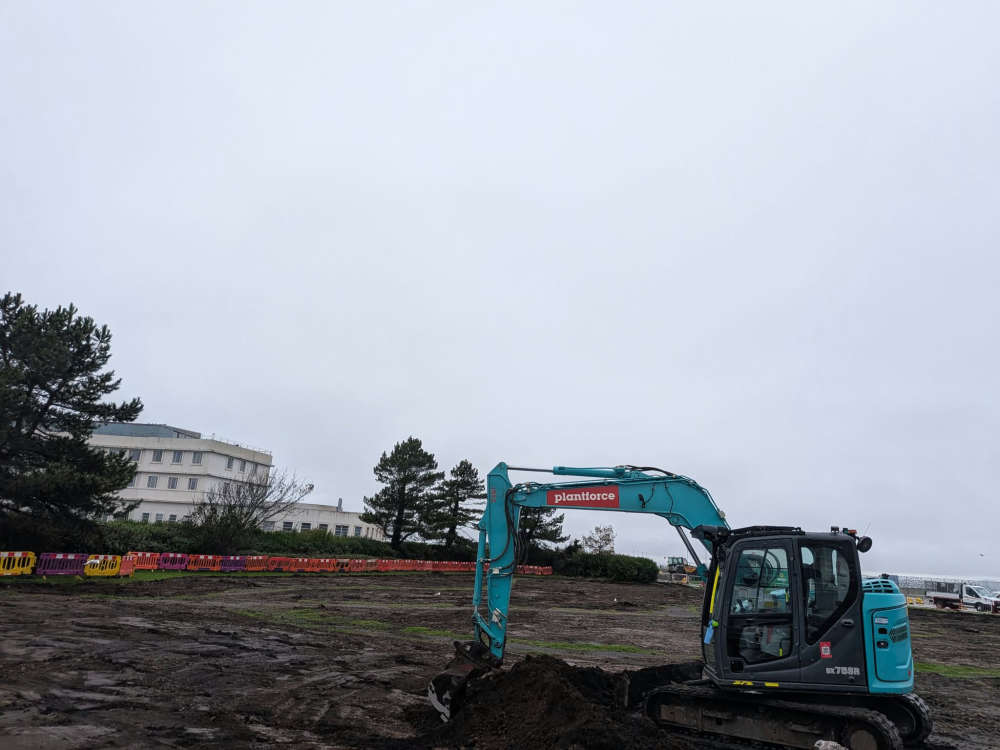 Eden Project Morecambe boss gives update on early stages of work on new £100m attraction
 Lancaster, Morecambe and Carnforth Remembrance services announced
 Road closures for pre-Tour de France work announced for Lancaster district
 Lancaster rock guitarist braves beard shave for charity
 Two arrests made after post office robbery in Lancaster
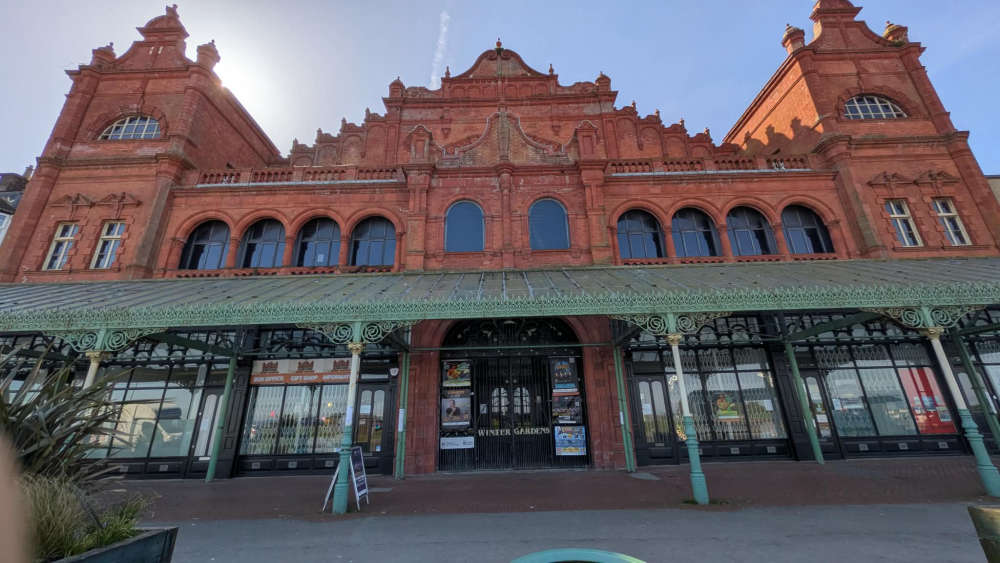 BBC Philharmonic Orchestra to perform concert for schools at Morecambe Winter Gardens
 PHOTOS: Plans go in for major Lancaster regeneration scheme
 Lancaster music venue's heartfelt message ahead of final night on New Year's Eve
 Morecambe school named among one of England's most improved for attendance
 Lancaster hospital nursing boss appointed to University of Cumbria honorary role
 Morecambe Football Club placed under another embargo by the National League
 £1.5m Lancaster scheme to boost water quality in River Lune is complete
 Family pays tribute to Lancaster pensioner who died in road crash
 Popular artist's print of Morecambe Bay Academy to be launched at alumni evening
 Work set to begin on new Heysham skate park
 Light Up Lancaster promises to illuminate city with ‘No Boundaries’
 Sadness as Morecambe sports and social club suffers break-in on night of reopening
 Man arrested after death of pensioner in Lancaster road crash