
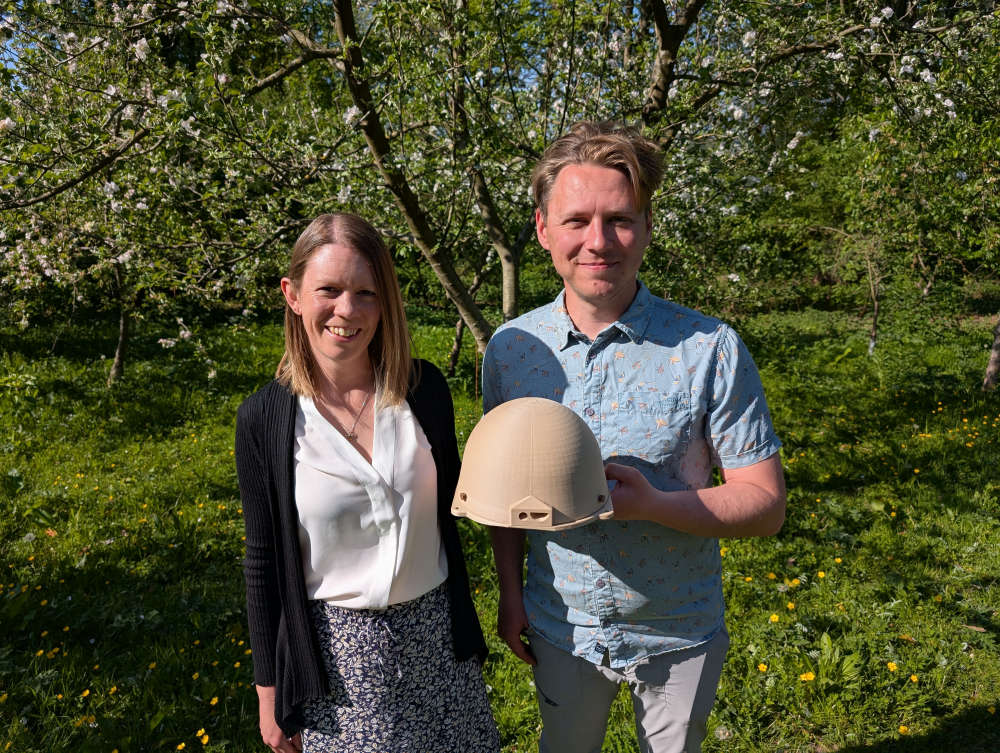
Researchers at Lancaster University have created an innovative new home for bumblebees to be used by residents.
The BeeBox - in the same way that bird boxes help provide birds with ideal nesting spots - will enable people to provide ideal homes for bumblebee colonies.
The bumblebee pollinates many of our flowers and they are also important for pollinating crops.
In recent years there has been an increase in public awareness about the need to support our pollinators by planting more bee-friendly flowers for foraging – but this addresses only half the problem.
Dr Philip Donkersley, an environmental scientist and invertebrate expert at Lancaster University, had the idea for the BeeBox after recognising the need for more bumblebee nesting sites.
“One of my biggest bugbears about bee conservation is that we are always planting more food for them, which is great, but rarely doing any work on providing nesting sites for wild bees," said Dr Donkersley.
“Finding suitable habitat and in particular nesting sites can be an issue for bumblebee queens in the spring. These bee boxes can help to address that for both rural and urban areas.”
The BeeBox has been through five years of development to perfect the design.
Dr Donkersley teamed up with Jenny Roberts, a lecturer in Mechanical Engineering at Lancaster University, to develop the BeeBox with the support of Impact Acceleration Account funding from both the Economic and Social Research Council (ESRC) and the Engineering and Physical Sciences Research Council (EPSRC).
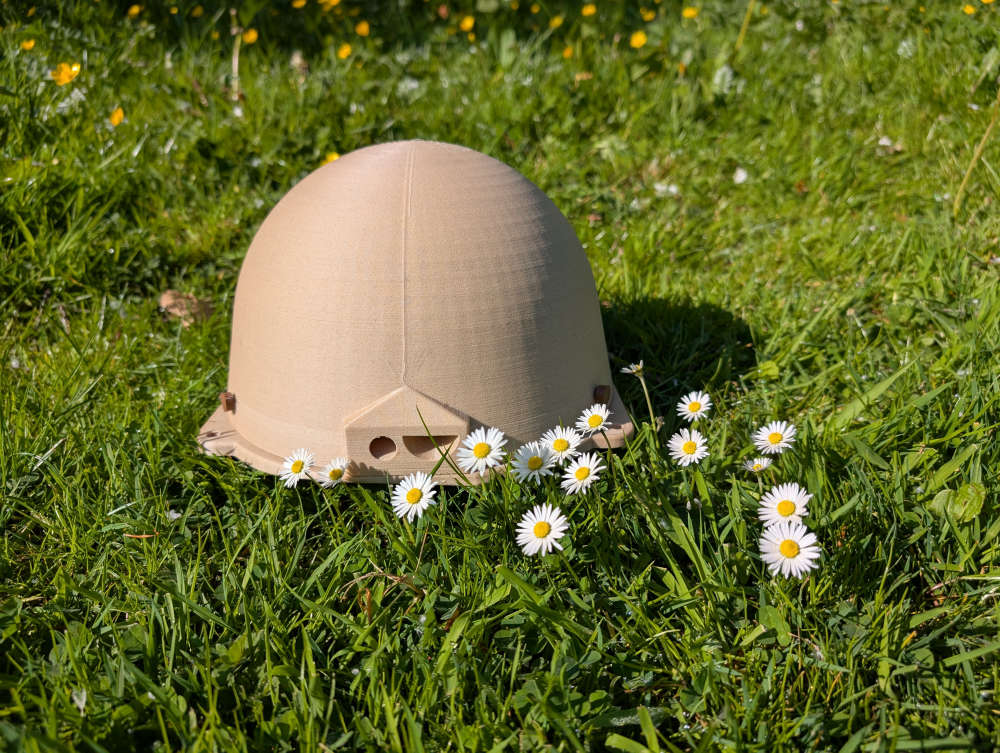
Informed through Philip’s extensive scientific knowledge about bumblebee nesting behaviours and preferences, as well as testing several versions of prototypes in field trials, Jenny’s design has resulted in a 3D printed nest using sustainable and biodegradable wood-fibre materials.
About the size of half a football, the structure of the dome shaped BeeBox incorporates cavity wall insulation principles to help regulate temperature within the nest to keep it from getting too hot or cold.
The pair believe they have developed a bee nesting box that is based on a truly scientific understanding of the actual nesting needs of bumblebees.
Jenny said: “Using 3D printing and moulding, we initially created a light-proof chamber with a small narrow entrance pipe. Once buried beneath ground, the prototype dome-shaped nests quickly proved to be popular with queen bees on the hunt for a safe place for a nest.
“It’s the first bumblebee nest box, to our knowledge, that has been scientifically developed. Following several iterations, we have determined the optimum internal cavity size, focused on creating a homeostatic internal environment, and it’s additively manufactured, so very efficient in material usage and reduces material waste.
“It was really important for us to use wholly biodegradable materials to ensure sustainability, and we needed the design to be strong and robust to withstand the elements and offer a safe potential nesting site. It has been designed to be resistant to predators, such as badgers, as well as curious livestock if used on grazing land.”
Philip said: “From a scientific point of view, bumblebee nesting habits are relatively understudied. We took what information we already know about bumblebee nests, such as complete darkness, limited entrances, their use of former mouse nests, and combined this with testing variants on our design that 3D printing allows us to do rapidly. We’ve ended up with a design based on what we know bumblebees need and want.”
Bumblebee colonies are typically 50-100 individuals. Towards the end of the year, they’ll produce five to 10 new queens, who will fly off, mate with male bumblebees, and then hibernate until March-April. All the big bees you see flying around in spring are last year’s queens who have survived winter.
Philip says bumblebees are safe to invite into our gardens.
“Bumblebees aren’t like honeybees – they are very gentle and safe to be around," he said.
"There’s actually a good evolutionary reason for this. Bumblebees live in much smaller colonies than honeybees - 50 vs 50,000. Honeybees can afford to expend a few hundred workers defending the hive, they can sting you and still have thousands of sisters left to keep on foraging. Bumblebees can’t afford to do this, if they die defending the hive, that’s a proportionally bigger loss of workers.”
Jenny said: “I’m not a bee expert but have been around bumblebees quite a lot now during the testing of Beebox. I’ve not been stung once or even felt threatened by them. Bumblebees are very friendly and aren’t aggressive. Therefore, providing you don’t disturb them they will live quite happily in your garden without bothering you.”
People interested in purchasing the ‘BeeBox’ nest box for bumblebees can order one directly through the Lancaster University website. They cost £60 and are being initially manufactured on a print to order basis.
People can find out more, or register their interest to purchase a BeeBox for their own gardens, by following the link here: BeeBox - Lancaster University.

 Man accused of stealing joints of meat at Lancaster Asda by hiding them in his trousers
 LISTEN and PHOTOS: Spectacular display of 12,000 poppies unveiled at Lancaster landmark
 Eden Project Morecambe boss gives update on early stages of work on new £100m attraction
 Lancaster, Morecambe and Carnforth Remembrance services announced
 Road closures for pre-Tour de France work announced for Lancaster district
 Lancaster rock guitarist braves beard shave for charity
 Two arrests made after post office robbery in Lancaster
 BBC Philharmonic Orchestra to perform concert for schools at Morecambe Winter Gardens
 PHOTOS: Plans go in for major Lancaster regeneration scheme
 Lancaster music venue's heartfelt message ahead of final night on New Year's Eve
 Morecambe school named among one of England's most improved for attendance
 Lancaster hospital nursing boss appointed to University of Cumbria honorary role
 Morecambe Football Club placed under another embargo by the National League
 £1.5m Lancaster scheme to boost water quality in River Lune is complete
 Family pays tribute to Lancaster pensioner who died in road crash
 Popular artist's print of Morecambe Bay Academy to be launched at alumni evening
 Work set to begin on new Heysham skate park
 Light Up Lancaster promises to illuminate city with ‘No Boundaries’
 Sadness as Morecambe sports and social club suffers break-in on night of reopening
 Man arrested after death of pensioner in Lancaster road crash